••

The Ghana Revenue Authority (GRA) has significantly ramped up its enforcement actions to secure national revenue, most notably by sealing the administrative block of Electrochem Ghana Limited due to an outstanding tax debt of GH"8.6 million dating back to 2021. Led by Joseph A. Annang, Head of Enforcement, the GRA took this step as a last resort after multiple demand notices were ignored. While the company made an immediate good-faith payment of GH"200,000, it remains under a seven-day ultimatum to settle the balance or face a total operational shutdown. This action coincides with other aggressive revenue protection measures, including the confiscation of over 39,000 jerrycans of vegetable oil involved in a transit fraud scheme. The oil, falsely declared as transit cargo, will be donated to the National School Feeding Programme following the interdiction of four GRA officers involved in the irregularity.
Complementing these national efforts, local government authorities and regulatory bodies are adopting digital tools and financial discipline to enhance development. The Shai-Osudoku District Assembly has launched a mechanised billing system, utilizing tablets and unique property account numbers to target GH"8 million in annual revenue while curbing fraud and leakages. Similarly, the Jasikan Municipal Assembly has demonstrated institutional excellence by ranking ninth nationally in the 2025 Public Financial Management (PFM) Compliance League Table. These advancements in governance are mirrored by the Public Utilities Regulatory Commission (PURC), which reported a 96% resolution rate for consumer complaints in the Bono East Region through the strategic use of WhatsApp and other social media platforms, facilitating over GH"90,000 in credit adjustments for customers.
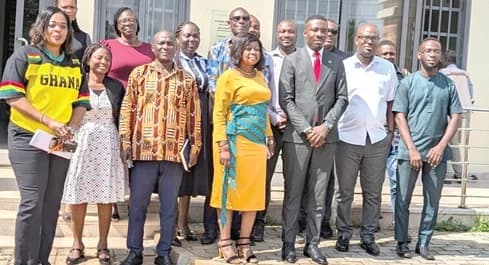
On the international front, Ghana is actively strengthening its bilateral ties to foster a more robust investment climate and industrial growth. The Ghanaian-German Economic Association (GGEA) recently hosted its "Meet the Government Series," focusing on strategic collaborations with the Ghana Investment Promotion Centre (GIPC) and the GRA to accelerate economic transformation. Dr. MacDonald Vasnani, CEO of GGEA, emphasized that initiatives like the now-codified 24-Hour Economy law provide critical partnership opportunities for German and Ghanaian businesses alike. Simultaneously, Minister for Trade and Industry Elizabeth Ofosu Adjare has proposed a Memorandum of Understanding (MoU) with Egypt to leverage the African Continental Free Trade Area (AfCFTA), focusing on textiles, pharmaceuticals, and technical training.
These developments highlight a multifaceted approach to Ghana's economic stability, balancing rigorous tax compliance with the modernization of public services and the expansion of global trade networks. As the GRA moves from friendly engagement to strict enforcement, and local assemblies adopt technology to secure funding, the government is signaling a commitment to fiscal discipline. Moving forward, the success of these initiatives will depend on the sustained integration of digital systems and the continued transparency of public institutions in managing both domestic revenue and international partnerships for sustainable economic growth.
This story touches markets covered on Anansi Intelligence ↗.
Related topic
Ghana Customs Recruitment: Latest News & Updates →Continue exploring similar stories


