••
Ghana and Côte d’Ivoire Harmonize Cocoa Pricing Policies to Boost Farmer Incomes and Market Stability
•2 min read•3 sources
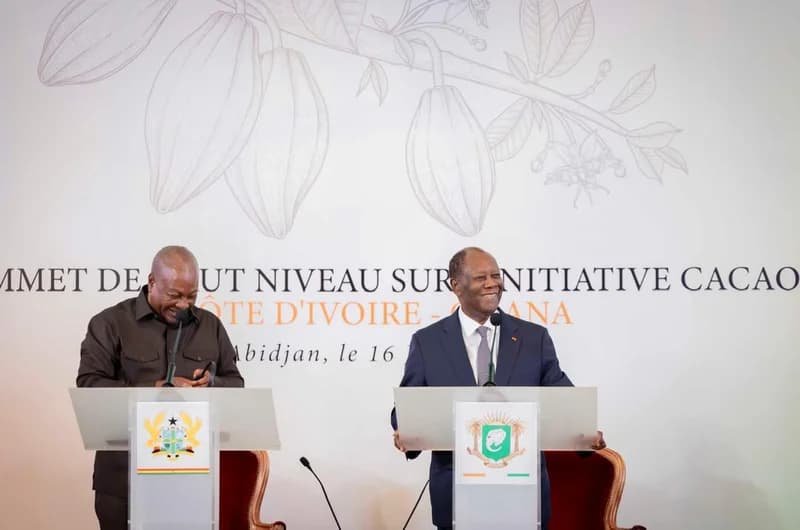
Ghana and Côte d’Ivoire, which together account for approximately 60% of the world's cocoa production, have formally agreed to harmonize their cocoa farm-gate pricing policies. This landmark decision was announced following the Côte d’Ivoire-Ghana High-Level Summit held in Abidjan. The primary objective of this strategic alignment is to significantly improve the incomes of cocoa farmers and ensure greater market stability across the sub-region. By working in tandem, the two West African neighbors aim to leverage their dominant market position to secure fairer compensation for producers who have long struggled with global price fluctuations.
The agreement introduces several key initiatives designed to reduce market distortions and enhance commercial cooperation. Central to this plan is the synchronization of crop-season calendars and the alignment of cocoa premiums. Furthermore, the two nations intend to bolster their market coordination efforts and tackle systemic issues such as price volatility and the prevalence of cocoa-related diseases. This collaborative approach builds upon the foundations of the Côte d’Ivoire-Ghana Cocoa Initiative (CIGCI), which has previously sought to bridge the gap between global market prices and the actual cost of production for local farmers.
Beyond immediate financial gains, the partnership addresses broader environmental and economic challenges facing the sector. The leaders emphasized that sustainability and economic justice are paramount, particularly as the industry grapples with the impacts of climate change and shifting global trade regulations. By presenting a unified front, Ghana and Côte d’Ivoire hope to combat the external pressures that often leave individual producing nations vulnerable to international market shocks. This synchronization is seen as a vital step toward ensuring the long-term viability of cocoa farming in West Africa and protecting the livelihoods of millions.
Looking ahead, there is potential for this initiative to expand beyond the two founding countries. Officials indicated that the partnership may soon include other African cocoa-producing nations, a move that would significantly increase the continent's collective bargaining power on the global stage. As the initiative gains momentum, the focus remains on transforming the cocoa value chain to prioritize the welfare of the farmers at the heart of the industry. This unified pricing strategy marks a pivotal shift in how West African nations navigate the global commodities market, aiming for a future defined by economic resilience and fair trade.
This story touches markets covered on Anansi Intelligence ↗.
More from africa
Continue exploring similar stories


