Ghana News AI
HomeBriefsAsk GhanaTopicsTools
•
•

Stay Informed

Get AI-curated news briefs from Ghana delivered to your inbox every morning. Free forever, no spam.

Explore

  • Home
  • Briefs
  • About

Categories

  • Politics
  • Business
  • Sports
  • Entertainment
  • Africa

Features

  • Analysis
  • Cedi Rates
  • Dollar to Cedi
  • Ghana Gold Price
  • BoG Policy Rate

Topics

  • Armed Forces Recruitment
  • WAEC Results & News
  • Nana Ama McBrown
  • NDC News
  • All Topics

Legal

  • Privacy Policy
  • Terms of Service
Ghana News AI© 2026. All rights reserved.
Made withfor Ghana
politics

Ghana Mourns Late Overlord of Dagbon Ya-Na Abukari Mahama II as Leaders Call for Unity and Continuity

21st July•3 min read•13 sources
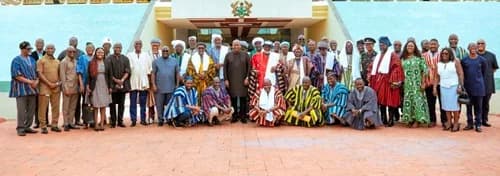
President Mahama (middle) with some government officials and the delegation from Dagbon
  1. Home
  2. /Politics
  3. /Ghana Mourns Late Overlord of Dagbon Ya-Na Abukari Mahama II as Leaders Call for Unity and Continuity

The Dagbon Kingdom and the nation of Ghana are in a period of deep mourning following the passing of the Overlord of Dagbon, Ya-Na Abukari Mahama II, on July 11, 2026. The late monarch, who was enskinned in 2019, has been hailed as a pivotal figure in the restoration of peace and stability in one of Ghana's most prominent traditional states. Following his death, the Ya-Na was laid to rest on July 13 in accordance with Islamic and Dagbon customs. A delegation from the Dagbon Traditional Council has officially notified state and traditional leaders, including the Speaker of Parliament, Alban Bagbin, and the Asantehene, Otumfuo Osei Tutu II, while outlining a roadmap for seventh-day prayers on July 24 and the installation of a Regent on July 31, 2026.

In a series of tributes on the floor of Parliament and through official statements, political leaders have described the late Ya-Na as a statesman of immense wisdom and humility. Former President John Dramani Mahama characterized the death as a profound national loss, praising the monarch's tireless efforts to heal historical divisions and foster national cohesion. This sentiment was echoed by Speaker Alban Bagbin, who urged the people of Dagbon to use this moment of grief to inspire greater unity and focus on development. Member of Parliament for Bawku Central, Mahama Ayariga, and other lawmakers like Haruna Iddrisu and Abdul-Fatawu Alhassan, highlighted the Ya-Na’s consultative leadership and his commitment to youth empowerment, noting that his reign successfully repositioned Dagbon as a symbol of hope.

The transition process is already underway, marked by significant traditional protocols. A high-powered delegation led by Nanton Naa Bawa recently met with the Asantehene, Otumfuo Osei Tutu II, at the Manhyia Palace to formally announce the passing and invite him to the upcoming rites. The Asantehene’s involvement underscores the late Ya-Na’s role in the broader landscape of Ghanaian traditional governance. Government officials have assured the Dagbon Traditional Council of full state support during the mourning period, including assistance for the final funeral rites and the provision of state honors to recognize the monarch's contributions to the republic.

Ya-Na Abukari Mahama II’s legacy is defined by the reconciliation he championed after decades of succession disputes within the royal lineage. By restoring dignity to the Dagbon skin and prioritizing fairness and equity, he created a stable environment that allowed for renewed social and economic growth in the Northern Region. As the kingdom prepares for the installation of the Regent at the end of July, leaders have emphasized that the best way to honor his memory is to preserve the hard-won peace and ensure a seamless transition of leadership that sustains the unity he established during his transformative reign.

Our Take

From the Team

Coming Soon

Our team will add key insights, trends, and actionable takeaways to help you stay informed faster.

This story touches markets covered on Anansi Intelligence ↗.

More from politics

Continue exploring similar stories

Ghana, Russia sign visa waiver agreement for diplomatic, service passport holders
politics|Yesterday

Kenneth Gilbert Adjei Pledges Defence Modernization as Ghana Strengthens Diplomatic and Security Ties

Ghana’s political and security landscape has seen significant shifts as newly appointed Minister of Defence, Kenneth Gilbert Adjei, officially assumed office. Pledging a comprehensive modernization of the Ghana Armed Forces (GAF), Adjei emphasized the need to address evolving security threats, including violent extremism and cybercrimes. His agenda focuses on enhancing personnel welfare and strategic logistics, succeeding Dr. Cassiel Ato Forson. This transition aligns with recent calls from former President John Agyekum Kufuor, who, during the 2026 Busia Institute Lecture, urged citizens to safeguard democratic institutions, reminding the nation that electoral victory is not synonymous with state ownership but a mandate for inclusive governance. On the diplomatic front, Minister of Foreign Affairs Samuel Okudzeto Ablakwa has successfully negotiated a landmark Visa Waiver Agreement with Russia for diplomatic and service passport holders. This historic agreement, signed during a visit to Moscow, marks the first such arrangement since formal ties began in 1958. Furthermore, Russia has doubled its annual scholarship allocation for Ghanaian students from 120 to 240, prioritizing specialized fields such as artificial intelligence, nuclear energy, and petroleum sciences. These developments come as the National Peace Council urges residents, particularly in Naaga, to remain vigilant against the infiltration of extremist groups, highlighting the role of social media in radicalization. Internal security and law enforcement have also seen major activity. Under Inspector-General of Police Christian Tetteh Yohuno, the Police Administration has promoted 13,689 officers in just over a year to boost morale and reward bravery. However, the service faces challenges, including a planned two-month strike by the Small-Scale Miners Association of Ghana over alleged extortion by security personnel. In a notable act of community enforcement, youth in Tanoso recently apprehended the Tanoso Ankobeahene, Nana Amoako Atta, for his alleged involvement in illegal mining activities near the Tano River, subsequently handing him over to the police. In the legal sphere, the Ashaiman District Court has remanded WOII Dzisenu Ben into police custody following the alleged murder of Abdul Shaban during a confrontation at Mawugbedzibe. Simultaneously, the police are searching for former boxer Ayittey Powers regarding alleged death threats against National Sports Authority Director-General Yaw Ampofo Ankrah. Amidst these events, economist Professor Godfred Bokpin has cautioned against over-attributing macroeconomic stability to the Ghana Gold Board (GoldBod), noting that while it helps reduce smuggling, primary stability remains rooted in broader fiscal and monetary policies. These varied developments underscore a period of active governance and systemic adjustment across Ghana's defense, diplomatic, and legal sectors.

Prof Samuel Kweku Hayford from UEW chairs new Graphic Communications Group Ltd Board as NMC appoints new boards for state-owned media organisations
politics|Yesterday

President Mahama and NMC Reconstitute State Media Boards as GJA Celebrates 77 Years of Democratic Vigilance

In a significant move to strengthen the country’s information landscape, the National Media Commission (NMC) has reconstituted the governing boards of four major state-owned media organizations. Following essential consultations with President John Mahama, the NMC appointed new leadership to the Graphic Communications Group Ltd (GCGL), the Ghana Broadcasting Corporation (GBC), the New Times Corporation, and the Ghana News Agency (GNA). These appointments come at a pivotal time as the Ghana Journalists Association (GJA) celebrates its 77th anniversary, emphasizing the critical role of credible journalism in safeguarding the nation’s democratic foundations and ensuring the public remains informed rather than "walking in the dark." The newly appointed boards feature a blend of academic and industry expertise designed to provide robust oversight. Prof. Samuel Kweku Hayford has been named Chairman of the GCGL board, while Francis Mills Robertson will lead the GBC. Dr. Kwame Akuffo Anoff-Ntow and Dr. Charity Binka have been appointed to chair the GNA and New Times Corporation boards, respectively. Each board will include various members alongside the organisations' Managing Directors. This institutional refreshing is seen as a key step in fulfilling the constitutional provisions for state media independence while ensuring they remain accountable to the public interest under the current administration. During the GJA’s 77th Anniversary Symposium in Accra, the association’s leadership underscored the necessity of high professional standards to maintain media credibility. GJA President Albert Kwabena Dwumfour and Vice President Rebecca Ekpe both warned that the association cannot defend journalists if they do not uphold the integrity of the profession. Deputy Government Spokesperson Shamima Muslim characterized the relationship between the media and the government as a "holy alliance" that has protected Ghana’s democracy through joint investigative efforts. Furthermore, Mr. Dwumfour challenged the government to broaden its fight against illegal mining, or galamsey, by targeting the powerful financiers and equipment suppliers who drive the illegal gold economy. Beyond media governance, the political climate reflects a push for greater administrative accountability and sector-specific support. The Mayor of Accra, Michael Kpakpo Allotey, recently issued a public apology and ordered a refund to a victim of extortion by city guards, reinforcing a zero-tolerance policy for official misconduct. Simultaneously, the creative arts sector has expressed renewed optimism; Kumawood actor Salinko and other creatives praised President Mahama for his consistent support of industry practitioners and his pledge to establish a welfare fund for aging creatives. These developments highlight a multi-faceted effort by the Mahama administration to address both grassroots grievances and sector-wide reforms. While Ghana celebrates these advancements in institutional governance, regional and international developments serve as a reminder of the global challenges facing press freedom. The detention of two French filmmakers in neighboring Togo and high-profile legal battles in the United States over media licensing highlight the complexities of modern media regulation. As Ghana moves forward with its new media boards and the GJA’s renewed focus on professionalism, the collaboration between the state and the press will be vital in maintaining the country’s status as a stable democracy and a protector of free expression.

Methodist Church Ghana calls for stronger action on environmental destruction
politics|Yesterday

President Mahama’s Reset Agenda Faces Scrutiny Amid Accountability Drive and Comprehensive Tax Reforms

Under the leadership of President John Mahama, Ghana is navigating an intensive push for public accountability, headlined by the government’s “Operation Recover All Loot” (ORAL) and the 2025 State of Corruption report. According to the Ghana Anti-Corruption Coalition (GACC), the Audit Service successfully recovered GH¢24.95 million in unearned salaries and financial irregularities during the 2025 fiscal year. While the Office of the Special Prosecutor (OSP) secured seven convictions from 71 investigations, the GACC report also highlighted that GH¢20.49 billion in financial irregularities persist across public institutions. This drive for transparency has prompted the questioning of several former New Patriotic Party (NPP) officials, a move Deputy General Secretary of the National Democratic Congress (NDC), Mustapha Gbande, defended as a necessary step for explaining unfulfilled contracts, despite NPP accusations of "selective justice" and political persecution. Complementing these accountability efforts, Vice President Professor Jane Naana Opoku-Agyemang has spearheaded a broad review of Ghana’s tax laws to modernize administration and enhance revenue mobilization. Speaking at recent conferences for the Chartered Institute of Taxation and the Ghana Revenue Authority, the Vice President emphasized simplifying VAT compliance and introducing digital monitoring devices to adapt to a changing economy. This legislative focus extends to the petroleum sector, where the Finance Committee of Parliament, led by MP Isaac Adongo, is advocating for a clear legal framework to protect the funding of the Public Interest and Accountability Committee (PIAC). PIAC is currently auditing uncompleted petroleum-funded projects, such as the Agenda 111 hospitals, while urging increased investment in exploration following a decline in production from 71 million barrels in 2019 to 37 million in 2025. Governance challenges remain at the forefront of national discourse, particularly regarding electoral integrity. The “Democracy Not for Sale” forum in Ho recently revealed that 98% of respondents in the Volta Region are aware of vote-buying practices, though a majority expressed a willingness to vote for candidates with better ideas over wealthier opponents. Stakeholders at the forum called for stricter enforcement of laws and better civic education to reduce the influence of hidden financiers. Meanwhile, the administration is managing tension in the agricultural sector, where the Young Cocoa Farmers Association has petitioned President Mahama regarding uncertainties in farming. While NDC communicators like David Wordi defend the administration's cocoa policies as benefiting farmers, NPP organizers warn that failure to address rising input costs could shift voting behavior in the 2028 elections. Religious and social advocacy groups are also demanding more proactive state action and ethical leadership. The Methodist Church Ghana, through Presiding Bishop Most Rev. Prof. Johnson Kwabena Asamoah-Gyadu, has urged the government to fulfill its campaign promises and take stronger stances against environmental destruction caused by illegal mining. Simultaneously, the Zonta Clubs of Ghana have called for parliamentary sanctions against MP Mohammed Yakubu for comments allegedly normalizing child marriage. These calls for reform are mirrored in local administration, such as the Savannah Regional Minister’s directive to prosecute sanitation law violators and the Sissala West DCE’s distribution of 1,500 bags of fertilizer under the "Feed Ghana" program, as the government seeks to balance high-level policy reforms with immediate community needs.

Senegals former Prime Minister Ousmane Sonko returned to parliament days after being sacked by the president.  By SEYLLOU (AFP)
politics|Yesterday

President Bola Tinubu Navigates Economic Crisis and Legal Scrutiny as Political Tensions Rise Across Africa and the US

Campaigning has officially commenced for Nigeria’s upcoming elections scheduled for January 16, unfolding amid a backdrop of severe economic distress and escalating security challenges. President Bola Ahmed Tinubu, who won the 2023 presidency with 36.6% of the vote, faces what is being described as a political rematch against competitors Peter Obi and Atiku Abubakar. Despite implementing ambitious reforms, such as the removal of fuel subsidies, the administration is struggling with a 34% inflation rate that has left over 60% of the population living below the poverty line. High levels of violence from armed groups and a historically low voter turnout of 27% further complicate the political landscape as the nation prepares for the polls. In addition to economic pressures, President Tinubu is facing intensified legal and international scrutiny. A United States District Court has mandated the FBI and DEA to release investigative files regarding the President by April 2025, following a lawsuit by activists and journalists seeking transparency. Despite these challenges, some analysts and public figures, including musician Davido, suggest that a fragmented opposition may inadvertently strengthen Tinubu’s prospects for the 2027 presidential cycle. The current division among opposition parties remains a significant hurdle for those seeking to challenge the incumbent’s economic and security record. Beyond Nigeria, democratic stability is being tested across the African continent. In Zambia, United Nations Rights Chief Volker Turk has expressed grave concern over the arbitrary arrest and detention of opposition figures following President Hakainde Hichilema’s recent electoral victory. Turk urged authorities to uphold due process and end the suppression of political rivals. Similarly, in Senegal, a growing rift between President Bassirou Diomaye Faye and Parliament Speaker Ousmane Sonko has stalled progress on setting dates for local elections. With municipal mandates expiring, the political atmosphere remains tense as the opposition pressures the presidency to avoid further delays in the democratic process. The international political sphere also saw significant movements in the United States, where primary elections in Florida and Alaska have finalized key nominees for the upcoming midterm elections. Republican Byron Donalds and Senator Dan Sullivan secured crucial victories, underscoring the shifting dynamics within the American political landscape. Meanwhile, in a case that has captured global attention for three decades, the murder trial of Tupac Shakur continues to navigate complex legal hurdles. Recent testimony from James 'Mob James' McDonald highlighted the difficulties of breaking gang-related silences in the prosecution of Duane 'Keffe D' Davis, marking a pivotal moment in the quest for judicial closure in one of the world's most notorious cold cases.

All
africa
business
education
entertainment
health
news
politics
sports
technology