••
President Mahama’s Reset Agenda Faces Scrutiny Amid Accountability Drive and Comprehensive Tax Reforms
•3 min read•32 sources
Under the leadership of President John Mahama, Ghana is navigating an intensive push for public accountability, headlined by the government’s “Operation Recover All Loot” (ORAL) and the 2025 State of Corruption report. According to the Ghana Anti-Corruption Coalition (GACC), the Audit Service successfully recovered GH¢24.95 million in unearned salaries and financial irregularities during the 2025 fiscal year. While the Office of the Special Prosecutor (OSP) secured seven convictions from 71 investigations, the GACC report also highlighted that GH¢20.49 billion in financial irregularities persist across public institutions. This drive for transparency has prompted the questioning of several former New Patriotic Party (NPP) officials, a move Deputy General Secretary of the National Democratic Congress (NDC), Mustapha Gbande, defended as a necessary step for explaining unfulfilled contracts, despite NPP accusations of "selective justice" and political persecution.
Complementing these accountability efforts, Vice President Professor Jane Naana Opoku-Agyemang has spearheaded a broad review of Ghana’s tax laws to modernize administration and enhance revenue mobilization. Speaking at recent conferences for the Chartered Institute of Taxation and the Ghana Revenue Authority, the Vice President emphasized simplifying VAT compliance and introducing digital monitoring devices to adapt to a changing economy. This legislative focus extends to the petroleum sector, where the Finance Committee of Parliament, led by MP Isaac Adongo, is advocating for a clear legal framework to protect the funding of the Public Interest and Accountability Committee (PIAC). PIAC is currently auditing uncompleted petroleum-funded projects, such as the Agenda 111 hospitals, while urging increased investment in exploration following a decline in production from 71 million barrels in 2019 to 37 million in 2025.
Governance challenges remain at the forefront of national discourse, particularly regarding electoral integrity. The “Democracy Not for Sale” forum in Ho recently revealed that 98% of respondents in the Volta Region are aware of vote-buying practices, though a majority expressed a willingness to vote for candidates with better ideas over wealthier opponents. Stakeholders at the forum called for stricter enforcement of laws and better civic education to reduce the influence of hidden financiers. Meanwhile, the administration is managing tension in the agricultural sector, where the Young Cocoa Farmers Association has petitioned President Mahama regarding uncertainties in farming. While NDC communicators like David Wordi defend the administration's cocoa policies as benefiting farmers, NPP organizers warn that failure to address rising input costs could shift voting behavior in the 2028 elections.
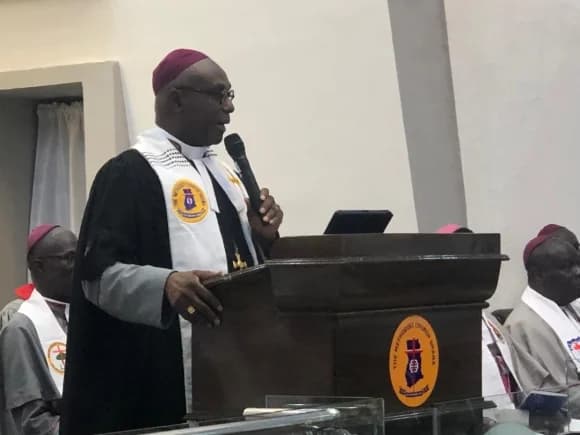
Religious and social advocacy groups are also demanding more proactive state action and ethical leadership. The Methodist Church Ghana, through Presiding Bishop Most Rev. Prof. Johnson Kwabena Asamoah-Gyadu, has urged the government to fulfill its campaign promises and take stronger stances against environmental destruction caused by illegal mining. Simultaneously, the Zonta Clubs of Ghana have called for parliamentary sanctions against MP Mohammed Yakubu for comments allegedly normalizing child marriage. These calls for reform are mirrored in local administration, such as the Savannah Regional Minister’s directive to prosecute sanitation law violators and the Sissala West DCE’s distribution of 1,500 bags of fertilizer under the "Feed Ghana" program, as the government seeks to balance high-level policy reforms with immediate community needs.
This story touches markets covered on Anansi Intelligence ↗.
Related topic
Ghana Customs Recruitment: Latest News & Updates →More from politics
Continue exploring similar stories


