••
US Launches Retaliatory Strikes as Iran Declares Closure of Strait of Hormuz Following Maritime Attacks
•3 min read•14 sources
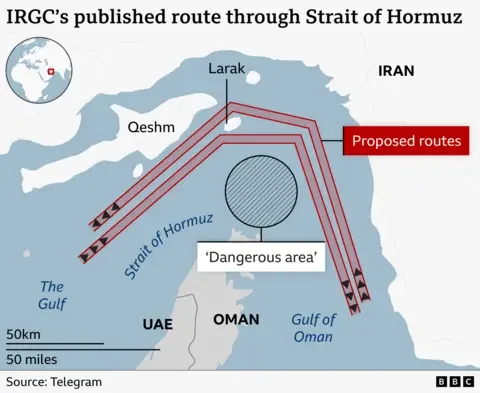
Tensions between the United States and Iran have reached a critical flashpoint following a series of military exchanges and the Iranian Revolutionary Guard Corps' (IRGC) announcement that it has closed the Strait of Hormuz. This drastic move follows a fresh wave of U.S. airstrikes against Iranian targets—the third such operation within a week—launched in response to an IRGC attack on a Cyprus-flagged commercial vessel. As one of the world's most vital maritime corridors for global oil transit, the status of the Strait has become the center of a military standoff, with the U.S. Central Command (CENTCOM) vowing to maintain freedom of navigation despite Iranian threats.
The recent escalation was triggered when the IRGC targeted a Cyprus-flagged ship, claiming the vessel had disabled its identification systems and deviated from its course. According to U.S. Central Command, the attack resulted in significant damage to the ship's engines and left at least one civilian crew member missing. In the wake of the incident, Iranian authorities declared the Strait of Hormuz closed to all traffic, stating that navigation would remain suspended until U.S. military intervention in the region ceased. The Persian Gulf Strait Authority further clarified that it would only review vessel transit requests once regional stability is restored and what it termed "unlawful movements" by foreign forces end.
U.S. Secretary of Defense Pete Hegseth and CENTCOM officials have condemned the Iranian aggression, asserting that U.S. forces are fully prepared to counter any threats to international shipping. While Iran maintains the waterway is shut, CENTCOM insists the Strait remains open for lawful transit and that American assets are positioned to deter further IRGC provocations. This military friction is compounded by a volatile political climate in Tehran. Iranian Supreme Leader Mojtaba Khamenei has issued a stern vow of vengeance, specifically citing the killing of his father and predecessor, Ali Khamenei, during strikes on February 28. These declarations of revenge have signaled a breakdown in diplomatic efforts and interim deals intended to de-escalate the conflict.
The situation remains fluid as both nations exchange threats of further escalation. While U.S. President Donald Trump has indicated that some diplomatic channels remain theoretically open, the persistent exchange of strikes and the targeting of commercial tankers have created a high-risk environment for global trade. The international community is closely monitoring the impasse, as any prolonged closure of the Strait of Hormuz would have severe implications for global energy markets and regional security. For now, the standoff continues, with Tehran demanding a total withdrawal of U.S. forces while Washington remains committed to enforcing maritime law in the strategic channel.
This story touches markets covered on Anansi Intelligence ↗.
More from politics
Continue exploring similar stories


