••
Global Markets in Flux: US-India Trade Landmark Amidst Precious Metals Volatility and Fed Policy Shifts
•2 min read•3 sources
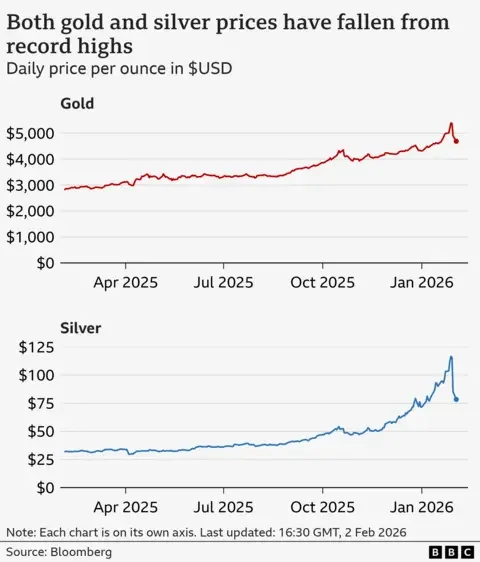
The global economic landscape is undergoing a major realignment following a landmark trade agreement between the United States and India and a dramatic correction in the precious metals market. US President Donald Trump and Indian Prime Minister Narendra Modi have finalized a deal that reduces tariffs and shifts energy dependencies, while the nomination of Kevin Warsh to lead the US Federal Reserve has sent shockwaves through the commodities sector. This nomination triggered the sharpest gold price drop in decades, illustrating the market's high sensitivity to impending shifts in US monetary policy.
Under the new bilateral agreement, the US has agreed to lower tariffs on Indian goods from 25% to 18%. In a strategic pivot, Prime Minister Modi committed to ending India's purchases of Russian oil and eliminating all internal trade barriers to US products. Furthermore, India has pledged to purchase over $500 billion worth of American goods, a move intended to strengthen ties between the world's two largest democracies. However, the deal has not been met with universal praise; US small business groups have criticized the arrangement, arguing that the new 18% floor still represents a higher tariff burden compared to historical levels.
In the financial markets, the 'Warsh effect' has led to a historic downturn for precious metals. Spot gold recorded its largest one-day decline since 1983, falling over 9%, while silver plummeted by 27% before a slight recovery. Despite this sharp correction, gold prices remain approximately 70% higher than they were a year ago. The volatility has extended to other sectors as well: crude oil prices dipped nearly 5% as US-Iran tensions eased, and Bitcoin slid below $75,000 amid regulatory uncertainty and declining investor appetite for risky assets. Conversely, the FTSE 100 defied the downward trend in commodities to hit record highs.
Economic analysts view the current slump in metals as a necessary market correction following the record-breaking rallies seen earlier in the year. Financial experts are now urging individual sellers and investors to exercise caution, advising them to seek multiple valuations and conduct thorough due diligence before liquidating assets. As global markets navigate these trade and policy shifts, the focus remains on how these high-level diplomatic agreements and leadership changes at the Federal Reserve will impact long-term inflation and economic stability.
This story touches markets covered on Anansi Intelligence ↗.
Live rates
Bank of Ghana policy rate →More from business
Continue exploring similar stories


