••

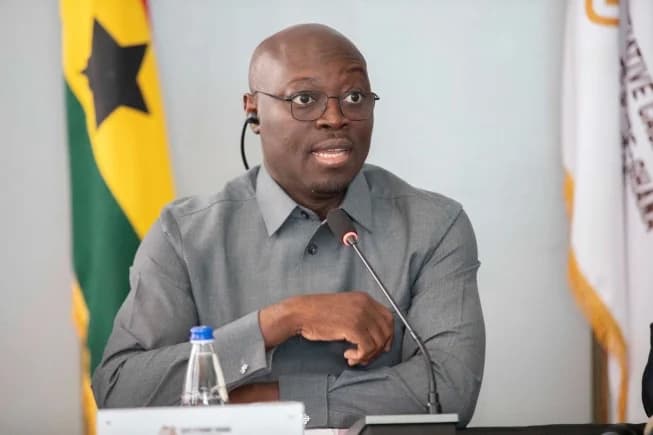
The Ministry of Finance has successfully settled a $700 million Eurobond obligation ahead of schedule, marking a significant milestone in Ghana’s ongoing economic recovery. The payment, which includes $525.2 million in principal and $174.8 million in interest, brings the total disbursement to Eurobond holders since January 2024 to $2.1 billion. Finance Minister Dr. Cassiel Ato Forson emphasized that this move is designed to bolster investor confidence and reduce outstanding debt as the country continues to adhere to the fiscal disciplines required under its $3 billion IMF bailout program. This commitment to debt management occurs alongside a strategic push to modernize the financial sector, highlighted by the Bank of Ghana’s new partnership with the Digital Assets Summit Africa (DASA) 2026 to advance digital finance regulation.
However, the government’s latest fiscal report for the first quarter of 2026 reveals a complex economic landscape. Total revenue and grants for the quarter amounted to GH¢57.531 billion (3.6% of GDP), falling slightly short of the GH¢59.646 billion target. This underperformance was largely attributed to lower international oil prices and the appreciation of the local currency, which impacted tax mobilization. In response, the government exercised significant expenditure restraint; total spending reached GH¢62.089 billion, a 21.2% decrease compared to the target of GH¢78.831 billion. While employee compensation remained relatively stable, capital expenditure lagged significantly behind targets, despite a year-on-year increase of 61.3%.
Despite these fiscal challenges, Ghana’s capital markets have shown robust activity. The secondary bond market recorded a 56.45% week-on-week increase in turnover, totaling GH¢2.44 billion, with heavy trading in the 2031-2034 maturity brackets. Simultaneously, interest rates on Government of Ghana Treasury bills saw marginal increases across all maturities in recent auctions; the 91-day bill rose to 5.87%, while the 364-day bill reached 12.93%. This trend reflects strong investor participation and a market adjusting to a new issuance calendar for the third quarter of 2026, which aims to extend debt maturity and mitigate refinancing risks.
On the diplomatic and corporate fronts, international partnerships and leadership transitions are shaping the business environment. Bilateral trade between Ghana and Canada reached US$752 million in 2025, a 56% increase driven by "responsible mining" and private sector collaboration. Canadian High Commissioner Myriam Montrat highlighted the Asanko Gold Mine as a model for local capacity building, positioning Ghana as a strategic gateway to the broader African market. Meanwhile, the banking sector enters a new era as Tony O. Elumelu retires as Group Chairman of United Bank for Africa (UBA) after 12 years of leadership. He is succeeded by Emmanuel N. Nnorom, who inherits a Pan-African financial group serving over 50 million customers across 20 countries, signaling a period of stable transition for one of the continent's largest financial institutions.
This story touches markets covered on Anansi Intelligence ↗.
Live rates
Ghana gold price →Continue exploring similar stories


