••

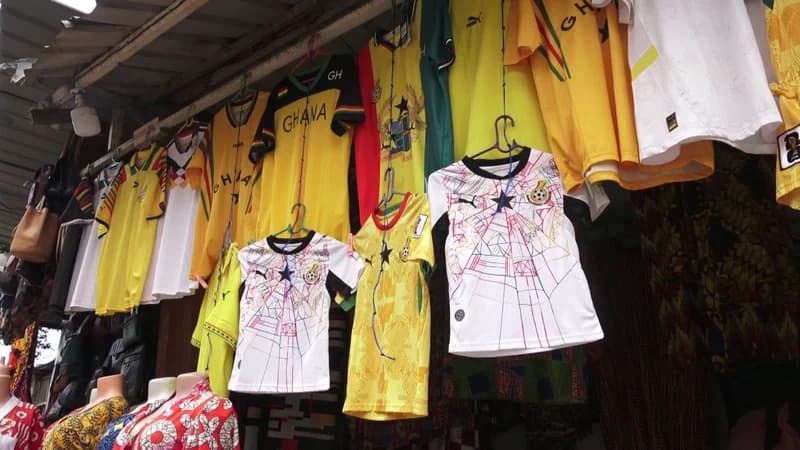
The early exit of the Black Stars from the 2026 FIFA World Cup has triggered a sharp downturn in Ghana's sports merchandising sector, forcing retailers to slash prices of jerseys and memorabilia to clear excess inventory. Traders who stocked up in anticipation of a deep tournament run now face significant financial pressure, with jerseys originally priced at GH¢250 being marked down to as low as GH¢130. This local retail slump stands in stark contrast to the global tech market, where Samsung Electronics has reported a staggering 1,800% jump in quarterly profits, driven by the insatiable global demand for AI-related semiconductors.
Retailers like Frederick Ashley have expressed readiness to cut costs by nearly 50% to recover investments, while others, including Bernard Asamoah, remain hesitant to sell below cost despite the declining demand. Some dealers are sitting on stocks of over 5,000 jerseys, hoping that upcoming national events like Independence Day might provide a secondary boost to sales. The situation has prompted calls for wholesalers to lower their prices, allowing small-scale vendors to pass savings on to consumers and stimulate a stagnant market.
Beyond physical merchandise, the issue of value and compensation extends into the digital and intellectual property space. Musicians and industry stakeholders continue to clash with telecommunications giants like MTN Ghana over Caller Ring Back Tone (CRBT) royalties. Despite a 2021 court ruling, artists claim telcos retain approximately 70% of revenues, leaving creators with a mere 12% share after various deductions. This systemic challenge was echoed by Listowell Yesu Bukarson, CEO of LYB Sports and Entertainment, who recently warned Ghanaian personalities to prioritize intellectual property protection to avoid post-career financial instability.
In the high-end investment sector, however, Accra’s real estate market remains resilient. Developments such as the Zenwood Apartments in the Airport Residential Area are marketing units starting at $130,000, targeting expatriates and corporate professionals with projected rental yields of up to 26% for short-term stays. This highlights a bifurcated economy where luxury investments and high-tech manufacturing thrive while traditional retail and creative sectors struggle with structural and demand-driven hurdles.
Looking ahead, the global semiconductor boom, which saw Samsung’s quarterly profits reach 89.4 trillion won ($58.4bn), suggests that AI will remain a dominant force in the business landscape through 2026. For Ghana, the immediate focus remains on economic recovery within the retail and creative sectors, balancing the volatility of sports-driven commerce with more stable long-term investments in property and intellectual capital. While other luxury markets like private aviation remain shrouded in opaque pricing, the general trend indicates a necessity for diversification and stronger regulatory frameworks to ensure fair compensation across all industries.
This story touches markets covered on Anansi Intelligence ↗.
Continue exploring similar stories


