••
Rev. Ntim Fordjour Demands Prosecution of Officials in $300m Drug Bust as Procurement and Extradition Scandals Mount
•3 min read•23 sources
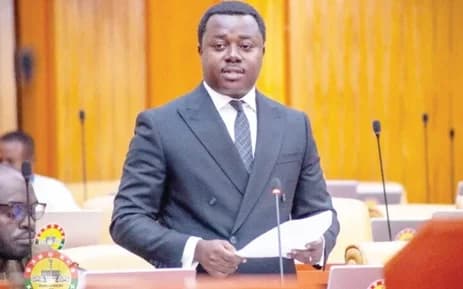
Ghana's political and legal landscape is currently dominated by calls for high-level accountability following a series of high-profile scandals involving narcotics, procurement irregularities, and the rule of law. Rev. John Ntim Fordjour, the Ranking Member of Parliament's Defence and Interior Committee, has formally urged the Interior Minister to identify and prosecute government officials allegedly involved in a massive narcotics trafficking case. The demand follows revelations that approximately 320 kg of methamphetamine, valued at over $300 million and recently seized in Australia, was facilitated through Ghana by individuals who allegedly manipulated national security systems. In a parallel challenge to government conduct, the Minority in Parliament has accused the Attorney-General of bypassing constitutional procedures by directing the release of GH¢350 million for flood relief despite ongoing court matters.
Institutional transparency is further being tested by the unfolding procurement scandal at the 120-bed Weija Children's Hospital. The Economic and Organised Crime Office (EOCO) recently arrested the contractor responsible for medical equipment following concerns raised by the World Bank regarding inflated prices and 'misprocurement.' Minister of State Felix Kwakye Ofosu confirmed that the investigation aims to protect public funds, though the move has drawn criticism from former Deputy Health Minister Alexander Akwasi Acquah. Acquah argued that the arrest might hinder the operationalization of the facility, which has been completed for two years but remains closed due to outstanding payment disputes between the contractor and the state.
Adding to the tension is a growing debate over Ghana's legal sovereignty and the rule of law. The extradition of Ghanaian socialite Frederick Kumi, also known as 'Abu Trica,' to the United States to face charges for an $8 million romance scam has sparked constitutional concerns. Legal practitioner Amanda Akuokor Clinton warned that Ghana must not become a 'rubber stamp' for foreign prosecutors, emphasizing the need for strict adherence to legal standards during such processes. Simultaneously, a confrontation in Enchi has raised questions about military authority; armed personnel reportedly seized 15 excavators from the District Assembly yard—equipment previously confiscated from illegal mining operations—despite an existing High Court order prohibiting their release.
These developments are occurring alongside a broader crackdown on law enforcement and administrative misconduct. The Ghana Police Service is currently investigating a Chief Inspector in the Ashanti Region for allegedly renting unauthorized structures to commercial sex workers in Kumasi. Meanwhile, a massive traffic enforcement operation has seen the seizure of unauthorized sirens and strobe lights from over 2,200 vehicles across 25 operational areas. As these cases move through the courts and investigative bodies, they underscore a critical period for Ghanaian governance, where the balance between executive power, judicial orders, and public accountability remains under intense scrutiny.
This story touches markets covered on Anansi Intelligence ↗.
More from politics
Continue exploring similar stories


