••
Africa’s Industrial Milestone: Nigeria Emerges as Net Petrol Exporter Amidst Continental Trade and Housing Reforms
•3 min read•12 sources
Nigeria has achieved a landmark shift in its economic history, transitioning from a fuel-import-dependent nation to a net petrol exporter. Driven by the massive output of the Dangote Petroleum Refinery, the country exported 44,000 barrels per day (bpd) in March 2026, surpassing its record-low import levels of 41,000 bpd. This transformation, supported by the policies of President Bola Tinubu’s administration, marks a pivotal moment for West Africa's energy landscape, potentially insulating the region from global market volatility and significantly enhancing Nigeria’s foreign exchange earnings and global financial standing.
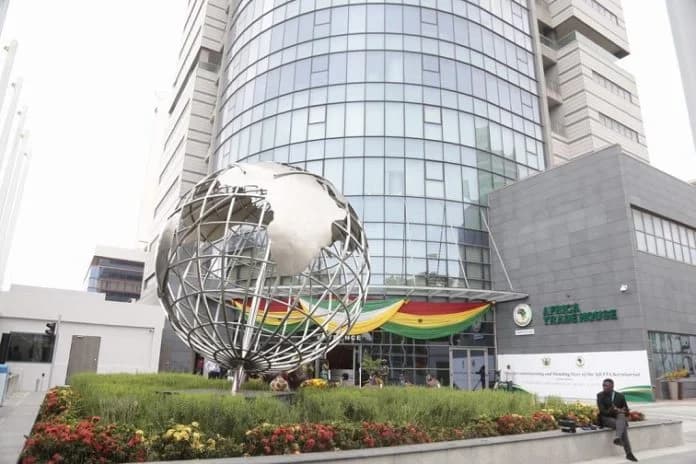
While Nigeria celebrates this industrial progress, the broader African Continental Free Trade Area (AfCFTA) continues to navigate significant hurdles. Aimed at unifying 54 nations into a single market, the AfCFTA’s success is currently threatened by regional insurgencies and the indirect impact of global conflicts like the Russia-Ukraine war. Trade experts emphasize that without a robust, collaborative regional security framework to protect trade routes and logistics—particularly in areas like northern Burkina Faso where transporters have faced violence—the initiative's potential to drive continental industrialization and competitiveness remains in a state of limbo.
Parallel to trade and energy developments, African leaders are refocusing on urban resilience and infrastructure. At the 2026 Africa Real Estate Festival (AREF) in Accra, Ghana’s Minister for Works, Housing and Water Resources, Kenneth Gilbert Adjei, called for a shift toward affordable and livable housing that reflects African cultural identity. The government is pushing for reforms in land administration and the National Affordable Housing Programme to bridge the housing gap, positioning Ghana as a stable hub for sustainable real estate investment while urging the private sector to prioritize people-centered development over property speculation.
However, rapid development is bringing its own set of environmental and safety challenges. The Volta River Authority (VRA) has issued urgent warnings regarding unregulated construction along the Volta River, which threatens the integrity of the Akosombo and Kpong Dams. These illegal developments compromise emergency preparedness plans and heighten flood risks for local communities. The VRA has stressed that unauthorized structures in flood-prone areas will not be eligible for compensation, underscoring the critical need for local authorities to enforce zoning laws to protect national infrastructure and human life.
At the grassroots level, efforts to improve basic services continue to complement these large-scale industrial shifts. In Ghana’s Wa West District, a GH¢500,000 investment has seen the commissioning of 10 new boreholes to alleviate severe water shortages, demonstrating the ongoing need for localized infrastructure alongside continental trade goals. As Africa moves forward, the synergy between massive industrial projects like the Dangote Refinery and sustainable, well-regulated local development will be essential to achieving long-term economic stability and improving the quality of life across the continent.
This story touches markets covered on Anansi Intelligence ↗.
Live rates
Dollar to cedi rate →More from africa
Continue exploring similar stories


