••
Niger Withdraws from ICC and Keir Starmer Resigns Amidst Shifting Global Alliances and Regional Instability
•3 min read•24 sources
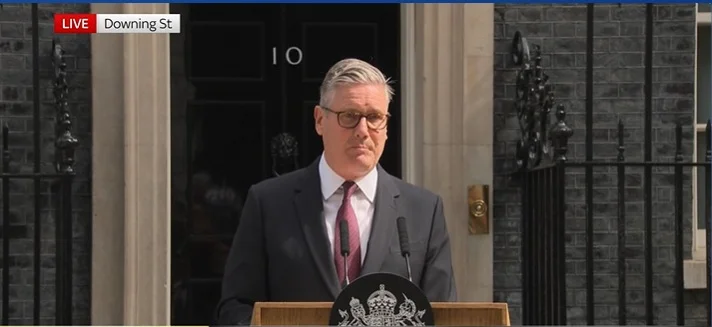
In a series of major geopolitical shifts, Niger has formally initiated its withdrawal from the International Criminal Court (ICC), while British Prime Minister Sir Keir Starmer has announced his resignation from Downing Street. Niger’s military junta, which took power in a 2023 coup, submitted a formal letter to the United Nations citing accusations of "selective justice" and claiming the tribunal has been exploited against its founding principles. This 12-month withdrawal process follows a broader regional trend in the Sahel, where nations like Mali and Burkina Faso are distancing themselves from Western judicial frameworks in favor of new alliances, particularly with Russia. Simultaneously, in London, Sir Keir Starmer has informed King Charles III of his decision to step down as Prime Minister and leader of the Labour Party, triggering a leadership contest set to open nominations in July 2026. This announcement follows mounting political pressure and has sparked viral interest in past prophecies regarding his exit.
Across the African continent, democratic frameworks are facing significant internal friction. In Ethiopia, Prime Minister Abiy Ahmed’s Prosperity Party secured a massive parliamentary majority, winning 438 out of 547 seats, though the election was marked by the absence of voting in the conflict-ridden Tigray region. Meanwhile, in the Democratic Republic of Congo (DRC), President Felix Tshisekedi is reportedly laying the groundwork for a third term through constitutional reform and potential referendums, a move that has already sparked deadly clashes with opposition protesters. These developments coincide with a diplomatic incident in Uganda, where leading Kenyan lawyer and former Justice Minister Martha Karua was denied entry at Entebbe airport while attempting to assist in the treason trial of Ugandan opposition leader Kizza Besigye.
Public health and civil rights concerns have also ignited unrest in Kenya, where the government was forced to halt the construction of a U.S.-run Ebola quarantine facility at Laikipia Air Base. Following deadly protests that resulted in three fatalities and a contempt of court ruling against Health Minister Aden Duale, the government apologized for ignoring judicial orders to pause the project. Critics of the facility pointed to the lack of historical Ebola cases in Kenya and raised concerns over national sovereignty and health risks. These tensions are mirrored by ongoing dissatisfaction from the families of victims of Kenya’s Gen-Z protests, who describe the government's compensation promises as a "smokescreen" for a lack of accountability regarding police violence.
On the international stage, maritime and judicial disputes are reaching critical resolutions. The UN’s International Maritime Organization (IMO) is coordinating the evacuation of over 11,000 sailors stranded in the Gulf due to the U.S.-Iran conflict, a mission that depends on keeping the Strait of Hormuz open for navigation. In South Africa, a year-long legal battle concluded with a court ruling that the family of late Zambian ex-president Edgar Lungu has the right to bury him in South Africa, overriding the Zambian government's push for a state burial. Collectively, these events highlight a period of intense transition where regional sovereignty, leadership accountability, and international law are being fundamentally re-evaluated.
This story touches markets covered on Anansi Intelligence ↗.
More from politics
Continue exploring similar stories


