••
President Mahama Unveils Governance Reform Agenda and New Bill to Protect State Assets
•3 min read•33 sources
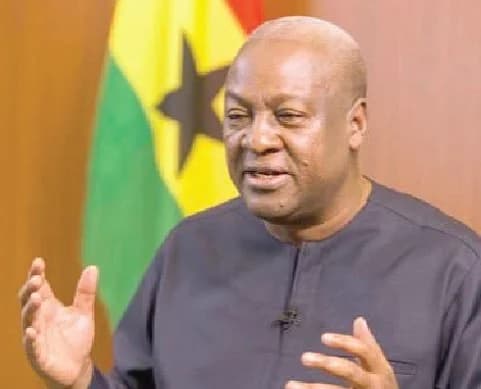
President John Dramani Mahama has reaffirmed his administration's commitment to accountability and institutional reform during the 4th Annual Convening of the Ghana Civil Society Forum in Accra. Central to his address was the announcement of the "Resetting Ghana" agenda, which seeks to bridge the gap between policy formulation and execution. To ensure transparency, the President revealed that the Cabinet has directed Attorney-General Dr. Dominic Ayine to draft a State Assets Protection Bill. This legislation is designed to establish strict guidelines for the management and disposal of public properties—including lands, buildings, and industries—to prevent the arbitrary sale of national assets that has historically sparked public concern.
In tandem with the new bill, the President announced the approval of the National Ethics and Anti-Corruption Plan (NACAP) for 2026–2030. This strategic framework aims to restore public trust by fostering integrity across all levels of public service. Mahama emphasized that governance must extend beyond the electoral cycle, focusing instead on inclusive development and local solutions to global economic challenges. To support this, a new Presidency Delivery Unit has been established to track government commitments in real-time, ensuring that evidence-based decision-making remains at the core of the administration's operations.
The President also provided updates on long-anticipated constitutional reforms, stating that the process will be guided by national interest rather than political expediency. Key proposals stemming from the Constitutional Review Committee include the establishment of an independent Emoluments Commission and a significant shift in the structure of government, such as reforming ministerial appointments. Notably, the President discussed recommendations to extend the tenure of elected officials from four to five years to allow for more stable long-term planning. Mahama urged all stakeholders, including the Ninth Parliament, to view these amendments as a necessary "national renewal" to strengthen decentralization and accountability.
Addressing the relationship between the state and non-state actors, President Mahama characterized civil society organizations (CSOs) as strategic partners rather than adversaries. He welcomed public scrutiny and dialogue, asserting that a resilient democracy requires active citizen participation and a supportive environment for advocacy. This collaborative spirit was echoed by the Ghana Federation of Labour (GFL), which recently called for the opposition to avoid "sabotage" and instead offer constructive debate on major initiatives like the 24-Hour Economy Policy, which the federation views as a critical long-term industrial strategy.
As part of the broader "Resetting Ghana" campaign, the President is scheduled to embark on a two-day tour of the Central Region on June 26-27, 2026. The itinerary includes inspecting health facilities, road projects, and the GNAT Hostel Project, as well as a sod-cutting ceremony at Assin Breku. This field-based approach, combined with the proposed legislative reforms, signals an administration focused on both tangible infrastructure delivery and systemic governance improvements as it navigates the challenges of its current mandate.
This story touches markets covered on Anansi Intelligence ↗.
Related topic
John Mahama: Latest News & Updates →More from politics
Continue exploring similar stories


