••
Kumasi Mayor Calls for Governance Unity as Traditional Leaders Embrace Peace and Modernization
•2 min read•7 sources
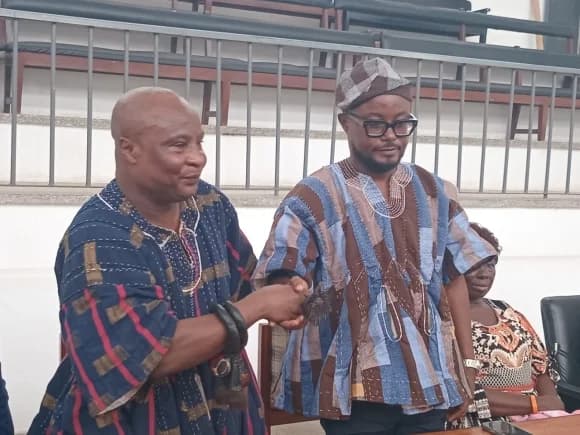
The Mayor of Kumasi, Richard Ofori Agyemang Boadi, has issued a powerful call for a new era of collaboration between religious leaders, traditional authorities, and political actors to drive Ghana’s national development. Speaking at the Chieftaincy Royals Conference in Kumasi, the Mayor emphasized that while politicians manage policy, chiefs preserve culture, and religious leaders provide moral guidance, these institutions often operate in silos, which limits their collective impact. He urged leaders to move beyond independent operations and prioritize national interest through values of integrity, truthfulness, and accountability, arguing that a unified approach is essential for sustainable development and effective governance.
This call for unity and ethical leadership is being mirrored by practical efforts to resolve conflicts and strengthen traditional governance structures across the country. In the Nkusukum Traditional Area, a significant legal dispute between the President of the Mfantseman Saltpond Development Alliance (MSDA), Ernest De-Graft Egyir, and Omanhen Nana Okesse Essandoh IX, was recently resolved through Alternative Dispute Resolution (ADR). The defamation suit, which stemmed from comments made during the 2025 Odambea Festival, concluded with an amicable settlement and a formal apology from the Omanhen. Both parties have committed to a joint public communication process to reinforce community respect, illustrating how ADR can preserve the dignity of traditional offices while ensuring legal peace.
Simultaneously, the evolution of traditional leadership is gaining momentum in the Volta Region. The Logba Traditional Council recently inducted three new sub-divisional chiefs: Togbe Takyi VII, Togbe Woedziavi, and Togbe Obisansah. During the ceremony at Logba Klikpo, Paramount Chief Togbega Dabrah VI and Queenmother Mamaga Agumekosua V challenged the new leaders to focus on community engagement and innovative development practices. This push for modernization was echoed by Togbe Takyi VII, who emphasized a shift toward more contemporary and effective leadership styles within the palace.
Collectively, these developments signal a growing trend toward the modernization of traditional authority in Ghana. From the KMA Mayor’s advocacy for institutional synergy to the successful mediation of high-profile disputes and the induction of forward-thinking chiefs, there is a clear move toward integrating chieftaincy into the broader framework of 21st-century governance. These efforts underscore the vital role that traditional leaders continue to play in maintaining social cohesion and driving grassroots progress, provided they adapt to the demands of transparency and collaborative leadership in a democratic state.
This story touches markets covered on Anansi Intelligence ↗.
More from politics
Continue exploring similar stories


