••
Hungary Implements Prime Ministerial Term Limits Amidst Global Legal and Political Shifts
•3 min read•5 sources
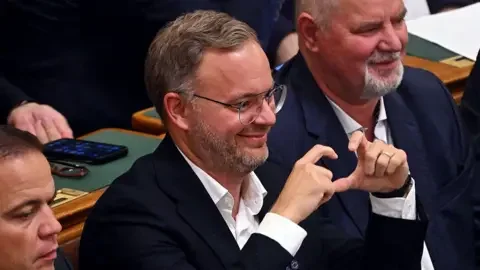
In a landmark move for European governance, the Hungarian parliament has passed a constitutional amendment limiting the prime minister’s tenure to a maximum of eight years. The legislation, which passed with a super-majority of 135 to 50, effectively prevents long-serving leader Viktor Orbán from seeking further terms. Pushed by political figure Péter Magyar, the amendment prohibits any individual from serving more than two terms since 1990, regardless of whether the terms were consecutive. This shift also includes the dissolution of the Sovereignty Protection Office, an agency previously used to safeguard Hungary’s constitutional identity, as the nation moves to unlock €16.4 billion in European Union funds by addressing long-standing corruption and rule-of-law concerns.
Meanwhile, in South America, Brazil's highest court has convicted Eduardo Bolsonaro, son of former President Jair Bolsonaro, for his attempts to solicit United States intervention during his father’s coup trial. Eduardo was found guilty of lobbying American authorities to impose sanctions against Brazil, a move the current administration under President Luiz Inácio Lula da Silva condemned as blatant interference in the nation's judicial sovereignty. Currently residing in the U.S. to avoid arrest, Eduardo has dismissed the conviction as "baseless," while former U.S. President Donald Trump has characterized the proceedings as a political attack. This development coincides with Jamaica entering formal negotiations with Washington to accept third-country migrants deported from the U.S., signaling a complex realignment of diplomatic and migration policies in the Western Hemisphere.
On the African continent, Ghanaian authorities are advancing a high-profile criminal investigation following the murder of Immigration Officer Stephen King Amoah. The Adabraka District Court was recently informed that police have received a critical DNA report, though proceedings have been adjourned to June 2026 pending a full autopsy and a formal docket submission to the Attorney-General. The case, involving two remanded suspects and a financial dispute totaling GH¢500,000, highlights the domestic push for judicial accountability. Simultaneously, in Europe, the intersection of social media and public unrest has led to a legal retreat by German broadcaster ZDF. The outlet retracted reports claiming Elon Musk incited migrant-targeted violence in Belfast after Musk threatened legal action, underscoring the growing tension between international tech figures and state-funded media regarding the accuracy of reporting during periods of civil unrest.
These disparate events reflect a global trend of tightening institutional controls and the heightening of legal stakes for political and public figures. From Hungary’s efforts to realign with EU standards through term limits to the ongoing scrutiny of political families in Brazil and the pursuit of justice for civil servants in Ghana, nations are grappling with the balance of power and the rule of law. As Jamaica navigates the logistical challenges of international migration agreements and media outlets face increased accountability for digital reporting, these legal and political maneuvers are set to establish new precedents for international relations and domestic governance in the coming year.
This story touches markets covered on Anansi Intelligence ↗.
More from politics
Continue exploring similar stories


