••
GJA Issues Ultimatum to NDC Regional Chairman Over Obaatanpa Radio Attack as Media Freedom Battles Intensify
•3 min read•13 sources
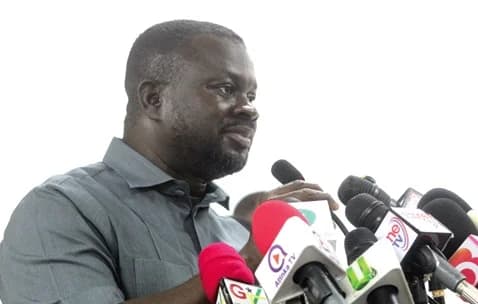
The Ghana Journalists Association (GJA) has issued a stern seven-day ultimatum to Mr. Richard Asiedu, the Central Regional Chairman of the National Democratic Congress (NDC), demanding a public apology and compensation following a violent incursion at Obaatanpa Radio in Kasoa. The incident, which reportedly took place on June 25, 2026, involved Mr. Asiedu and several associates who allegedly assaulted staff and forcibly shut down the station after it aired content critical of the chairman. GJA President Albert Kwabena Dwumfour has characterized the act as a grave violation of press freedom and a direct affront to the 1992 Constitution. The association has warned that failure to comply will result in Mr. Asiedu being blacklisted as an "enemy of press freedom" and has called upon the Ghana Police Service and the National Media Commission to launch immediate investigations.
The Obaatanpa Radio incident is part of a broader landscape of legal and physical challenges facing the Ghanaian media. In a separate development, Larry Dogbe, the Managing Editor of The Herald, has filed an appeal against a seven-day custodial sentence for contempt of court. Mr. Dogbe argues that the injunction leading to his conviction was vague and that the ruling unconstitutionally forces him to prove the truth of reporting based on legitimate public documents and Supreme Court decisions. These tensions have prompted the GJA to advocate for the introduction of anti-SLAPP (Strategic Lawsuits Against Public Participation) legislation to protect journalists from what they describe as "abusive litigation." The call for media protection extends beyond Ghana's borders, as a coalition of 50 West African journalists recently urged for the release of Beninese journalists Hugues Comlan Sossoukpe and Ali Moumouni, who have been detained without trial for a year.
Amidst these conflicts, the Ministry of Communication, Digital Technology, and Innovations is moving forward with structural reforms to the nation’s media infrastructure. Minister Samuel Nartey George recently received the final report from the Digital Terrestrial Television (DTT) Committee, which conducted an independent review of the platform’s sustainability, management, and affordability. The report, developed through collaboration with the National Communications Authority and the Ghana Broadcasting Corporation, aims to provide a framework for future policy decisions to enhance the resilience of digital broadcasting. Minister George emphasized that stakeholder dialogue remains essential for the next phase of implementation, signaling a shift toward more robust governance in the digital sector.
On the political front, internal party dynamics and local governance concerns are creating additional pressure for leadership. Broadcast journalist Salifu Mase, popularly known as Mugabe, has publicly criticized the NDC leadership for failing to reprimand Stephen Ofosu Agyare, the Awutu Senya East Chairman, following disparaging remarks made against MP Phillis Naa Koryoo Okunor. Meanwhile, in Gomoa East, constituents recently hooted at MP Desmond De-Graft Kwesi Paitoo during a site visit, expressing intense frustration over the stalled Kasoa-Nyanyano road project. These incidents collectively underscore a growing demand for accountability and professional conduct among political actors, as both the media and the public increasingly challenge perceived negligence and intimidation.
This story touches markets covered on Anansi Intelligence ↗.
Related topic
NDC (National Democratic Congress): Latest News →More from politics
Continue exploring similar stories


