••
Ghana's Economic Vision: Integrating Industrial Growth, Tourism Diplomacy, and Grassroots Empowerment
•2 min read•3 sources
Ghana is charting a multi-dimensional economic path that combines high-level industrial targets, international trade diplomacy, and local capacity-building. Central to this strategy is an ambitious plan to revitalize the manufacturing sector, aiming for it to contribute at least 15% of the national GDP by 2030. This initiative seeks to create 500,000 industrial jobs, addressing a sector that has historically stagnated at around 10% for over half a century. To achieve these targets, the proposal focuses on critical structural reforms, including restructuring energy debts and enhancing renewable energy sources to provide the stable, affordable power necessary for a competitive industrial hub in West Africa.
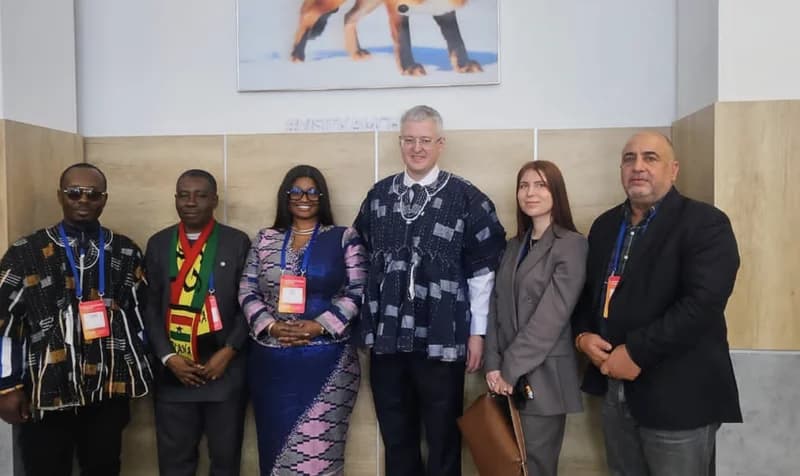
On the international front, the Ghana Tourism Authority (GTA) is actively leveraging cultural diplomacy to attract foreign investment. CEO Maame Efua Houadjeto recently led a mission to Russia, where she engaged with business leaders to promote Ghana as a prime destination for tourism and trade. A highlight of the mission was the presentation of the traditional Fugu textile, which garnered significant investor interest and showcased the potential of Ghana's cultural exports. These diplomatic efforts are aimed at building long-term partnerships and securing investment for tourism infrastructure, further diversifying Ghana's economic base beyond traditional sectors.
This macro-level economic strategy is mirrored at the grassroots level through intensive empowerment programs. In Kpone Katamanso, vocational training initiatives led by Bishop Abraham Aidoo are equipping women with practical skills in income-generating activities such as yoghurt and soap production. Beyond technical training, the program emphasizes a growth-oriented mindset and financial management, with facilitators like Miriam Mahama encouraging participants to embrace self-reliance. By fostering local entrepreneurship, these efforts aim to reduce dependency and ensure that economic growth is inclusive and sustainable for communities across the Greater Accra region.
Together, these initiatives represent a unified push toward a more resilient and self-sufficient Ghanaian economy. By aligning industrial policy, international trade promotion, and community-level skill development, the nation is positioning itself to tackle long-standing economic challenges. The success of these efforts will depend on the continued integration of large-scale structural reforms with the empowerment of individual citizens, creating a multi-dimensional foundation for prosperity in the years ahead.
This story touches markets covered on Anansi Intelligence ↗.
More from business
Continue exploring similar stories


