••
Ghana’s Governance Under Scrutiny: Leaders and Civil Groups Demand Accountability Amid Galamsey Crisis and Political Shifts
•3 min read•25 sources
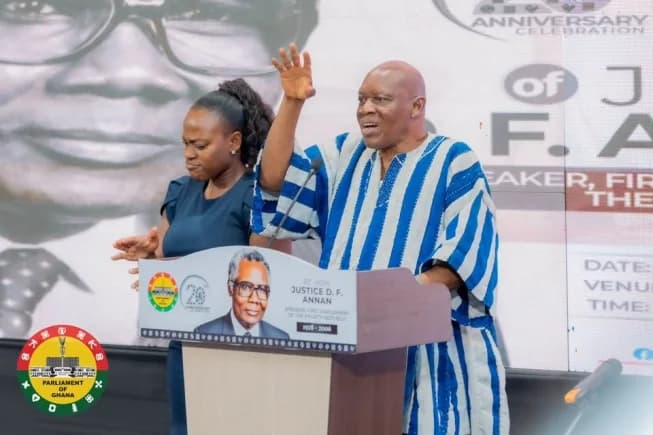
Ghana’s political and civil leadership are increasingly calling for a 'moral reset' and the strict enforcement of existing laws to combat corruption and the persistent menace of illegal mining, or galamsey. Former Chief of Staff Akosua Frema Osei-Opare recently emphasized that the nation’s struggle with graft is not due to a lack of legislation but a failure in enforcement, a sentiment echoed by retired Supreme Court Justice William Atuguba. Justice Atuguba criticized the prevailing political culture where party loyalty often supersedes national interest, urging Members of Parliament to prioritize public service over personal and partisan ambitions. This call for integrity was further amplified at the third National Development Conference, where leaders like Speaker Alban Bagbin and Sheikh Armiyawo Shaibu stressed that ethical values are the bedrock of sustainable development and national prosperity.
The fight against illegal mining remains a central point of contention between the government and civil society. While the Minister for Lands and Natural Resources, Emmanuel Armah-Kofi Buah, has denied reports of local assemblies authorizing illegal mining equipment, the Ghana Coalition Against Galamsey (GCAG) has challenged the government’s narrative of success. GCAG Convenor Kenneth Ashigbey highlighted ongoing lawlessness and selective enforcement, particularly in the Eastern Region. Practical enforcement efforts were recently visible in the Ashanti Region, where National Security operatives arrested several individuals, including site owner Yussif Ibrahim, for operating near the Agenda 111 hospital project in Adansi Asokwa. However, the human cost of the crisis continues to rise, evidenced by a recent shooting death in New Edubiase linked to a galamsey confrontation, leading to the remand of an Assembly Member and his brother.
In the legislative and judicial spheres, experts are urging caution and adherence to democratic principles. Dr. Rasheed Draman of the African Centre for Parliamentary Affairs advised Parliament against rushing to declare the seat of Asante Akyem North MP Ohene Kwame Frimpong vacant following his arrest in Amsterdam, stressing the importance of the presumption of innocence. Meanwhile, Minority Leader Alexander Afenyo-Markin and other figures have called for the preservation of the democratic values championed by the late Justice D. F. Annan. The judiciary also recently settled local political disputes, with the High Court affirming the legitimacy of the 2026 SRC presidential election at AUCB by dismissing a petition challenging the results. These developments occur alongside efforts to preserve the legacies of past leaders, such as the upcoming 14th-anniversary commemorations for President John Evans Atta Mills and the 113th birthday celebration of Prof. Kofi Abrefa Busia.
As the political landscape evolves, new aspirants are already looking toward the 2028 elections, signaling a potential shift toward independent leadership. Businessman Lord Ibrahim Sani has launched the Rising Generation Movement to mobilize youth for the 2028 presidential race, while highlife musician KK Fosu has declared his intention to contest the Akuapem North parliamentary seat as an independent candidate. These ambitions coincide with sharp critiques from independent presidential candidate Kofi Koranteng, who has publicly called for accountability regarding corruption and unemployment. Whether through the emergence of new political movements or the strengthening of existing institutions, the current discourse suggests that Ghana is at a crossroads, where the effective enforcement of laws and a renewed commitment to national ethics will determine the country’s developmental trajectory.
This story touches markets covered on Anansi Intelligence ↗.
More from politics
Continue exploring similar stories


