••
Ghana Deepens European Partnerships as Burkina Faso Severs French Ties and South Africa Faces Political Shifts
•3 min read•6 sources
The diplomatic and political landscape across Africa is undergoing a significant transformation, characterized by Ghana's strengthening of European alliances, Burkina Faso's radical departure from traditional Western partnerships, and a shifting domestic political tide in South Africa. In Accra, the 735th National Day of Switzerland was recently celebrated, marking over seven centuries of the Swiss confederation and highlighting the robust bilateral relations between the two nations. The event also served as a farewell to the outgoing Swiss Ambassador, Ms. Simone Giger, who was honored for her four-year tenure focused on trade, climate action, and governance. During the reception, attended by government officials and the diplomatic corps, Ambassador Giger praised Ghana's cultural richness but issued a stern call for collaborative action against illegal mining and environmental degradation, while Ghanaian Minister Samuel Nartey George reaffirmed Switzerland's role as a vital development partner in sectors ranging from renewable energy to cocoa production.
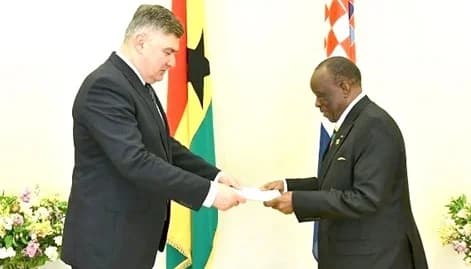
Parallel to these celebrations, Ghana is actively expanding its footprint in Eastern Europe. Ambassador Benedict Batabe Assorow recently presented his credentials to the President of Croatia, signaling a strategic move to transition from merely cordial relations to structured, tangible engagements. Assorow emphasized the potential for collaboration in technology and economics, leveraging Croatia's specialized expertise and Ghana’s strategic positioning within the African Continental Free Trade Area. This proactive diplomacy underscores Ghana's commitment to diversifying its international partnerships and securing technical cooperation that directly benefits its national development agenda.
In stark contrast to Ghana's diplomatic expansion, the military junta in Burkina Faso has formally severed diplomatic ties with France, its long-standing colonial and security partner. Under the leadership of Captain Ibrahim Traoré, the Burkinabe government accused France of "ceaseless activism" and neo-colonial ambitions that allegedly undermined national interests. This rupture follows the expulsion of French troops and a decisive pivot toward Russia and China for security and economic support. While the French foreign ministry has labeled the decision as "hostile and unfounded," the move reflects a broader trend in the Sahel region where military-led governments are distancing themselves from Western influence and the ECOWAS bloc in favor of new regional alliances.
These geopolitical shifts are mirrored by significant internal political changes in South Africa, where the dominant African National Congress (ANC) is facing unprecedented challenges. A recent by-election victory by the Democratic Alliance (DA) in the black township of Evaton West marks a historic shift in voter demographics, as the ANC’s support plummeted below 32%. Analysts suggest that widespread frustration over service delivery and municipal mismanagement is eroding traditional party loyalties. Collectively, these events—from the diplomatic corridors of Accra and Zagreb to the protest-weary streets of Evaton West and the junta-led offices of Ouagadougou—illustrate a continent in a state of profound political and diplomatic flux.
This story touches markets covered on Anansi Intelligence ↗.
More from politics
Continue exploring similar stories


