••
Ghana Drives Economic Transformation Through Strategic Agricultural Investments and Aviation Hub Ambitions
•3 min read•4 sources
Ghana is aggressively pursuing a multi-sectoral industrialization strategy designed to reset the national economy, focusing on large-scale agricultural transformation and the establishment of a regional aviation hub. Central to this vision is a call for strategic international partnerships, shifting the country’s economic model from a reliance on aid to the formation of high-impact joint ventures. Under the 2026 Budget and President John Dramani Mahama’s economic recovery agenda, the government is positioning agriculture and aerospace as primary drivers for export growth, job creation, and foreign exchange stability.
At the recent 2026 Chinese Lunar New Year Gala in Accra, the Minister for Food and Agriculture, Eric Opoku, invited Chinese investors to play a pivotal role in the country’s agro-industrial evolution. A cornerstone of this effort is the Integrated Oil Palm Development Programme (2026–2032), which seeks to cultivate 100,000 hectares of land. This initiative is projected to create 250,000 jobs and reduce palm oil imports by $200 million annually. To support this, the government is intensifying the distribution of seeds and fertilizers, expanding irrigation infrastructure, and developing dedicated agro-industrial zones to leverage access to the 400-million-strong ECOWAS market.
On the local front, the push for agricultural modernization is already yielding results through targeted mechanization. In the Sekyere Central District, the Ministry of Food and Agriculture has collaborated with AGRA Ghana on the "Strengthening Access to Mechanisation for Agri-Businesses" project. By introducing innovative tools such as push planters and handheld shellers, the initiative has improved productivity for over 510 individuals, primarily women and youth. This project aligns with the broader "Feed Ghana Programme," which aims to empower over 3,000 people by making farming more efficient and economically attractive to the younger generation.
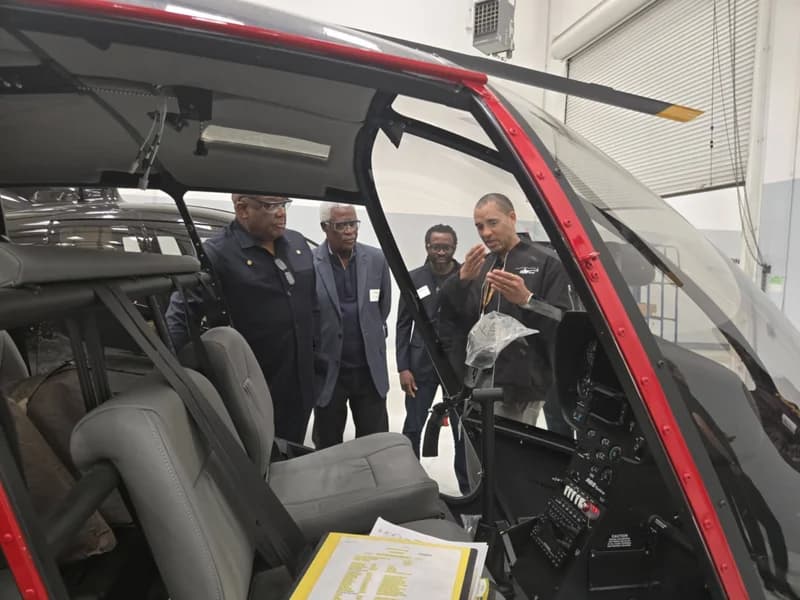
Parallel to its agricultural focus, Ghana is making significant strides in the aerospace sector to become West Africa’s premier aviation services hub. Ambassador Victor Smith recently engaged with the Robinson Helicopter Company in California to explore collaborations in helicopter supply, maintenance services, and technical training for pilots and engineers. This strategic move aims to utilize the African Continental Free Trade Area (AfCFTA) framework to attract advanced technology transfers and industrial partnerships, further strengthening Ghana’s technical capabilities.
These combined efforts in agriculture and aviation represent a comprehensive approach to sustainable economic development. By integrating modern technology with strategic foreign investment and regional trade agreements, Ghana is setting the stage for a resilient industrial future. The successful execution of these programs is expected to not only stabilize the domestic economy but also establish Ghana as a critical industrial and logistics anchor within the West African sub-region.
This story touches markets covered on Anansi Intelligence ↗.
Live rates
Dollar to cedi rate →More from business
Continue exploring similar stories

