••
Ghana’s Quest for Accountability: Gertrude Torkornoo’s Legal Battle and Transparency Declines Shape Governance Landscape
•3 min read•8 sources
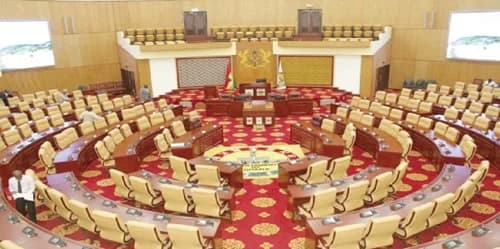
Ghana’s democratic landscape is currently navigating a period of intense scrutiny as high-profile legal battles and declining transparency scores highlight systemic challenges within the Fourth Republic. The removal of former Chief Justice Gertrude Torkornoo has triggered an extensive judicial marathon across multiple courts, while demands for executive accountability remain at the forefront of political discourse. At the same time, institutional efforts to bolster civic education and budget transparency are facing uphill battles against public skepticism and deteriorating performance indicators, raising questions about the resilience of the nation’s governance frameworks.
The legal struggle surrounding Gertrude Torkornoo’s removal has expanded significantly, involving five Supreme Court cases and multiple High Court applications. Deputy Attorney General Dr. Justice Srem-Sai recently revealed that while the ECOWAS Court dismissed her claims of rights violations on June 24, 2026, Torkornoo continues to seek consolidation of her remaining domestic cases to address core issues of judicial independence and constitutional governance. Parallel to this judicial drama, National Petroleum Authority (NPA) CEO Edudzi Kudzo Tameklo has asserted that former Finance Minister Ken Ofori-Atta cannot evade legal scrutiny by remaining abroad. Tameklo emphasized that accountability is a cornerstone of democracy and that public officials must face investigation regardless of their location, citing international precedents to warn that impunity undermines public trust.
In response to growing perceptions of corruption and partisan gridlock, the Parliament of Ghana, in collaboration with Junior Graphic, has launched the "Parliament and You" educational series. This initiative aims to instill values of probity and social justice in the youth, addressing critical gaps such as asset declaration deficiencies and the slow passage of essential legislation like the Property Rights of Spouses Bill. The program emerges as a response to criticisms of Parliament's performance, seeking to bridge the gap between democratic ideals and the reality of executive dominance and ethical challenges among parliamentarians.
However, these efforts to rebuild trust are complicated by the latest Open Budget Survey (OBS) results, which show a concerning decline in fiscal transparency. Ghana’s score for budget openness dropped from 30% in 2023 to 25% in 2025, according to the International Budget Partnership. While public participation saw a slight increase to 33%, the overall transparency score of 22% remains significantly below the 61% benchmark for sufficient information publication. Oversight scores were notably low, with Parliament at 28% and the Audit Service at 44%, highlighting the urgent need for more accessible budget information and stricter adherence to the Public Financial Management Act.
The convergence of these events paints a picture of a democracy at a crossroads, where the rhetoric of accountability is being tested by institutional performance. The decline in budget transparency and the ongoing litigation regarding the judiciary underscore the need for structural reforms to strengthen legislative oversight and judicial independence. As public interest in the Torkornoo cases remains high and the call for executive accountability persists, the effectiveness of civic education initiatives will likely depend on whether the state can demonstrate a genuine commitment to the principles of probity and the rule of law in practice.
This story touches markets covered on Anansi Intelligence ↗.
More from politics
Continue exploring similar stories


