••
West African Watchdogs and Leaders Intensify Accountability Drive Amid Nigeria’s $1M ‘Phantom Agency’ Scandal
•3 min read•15 sources
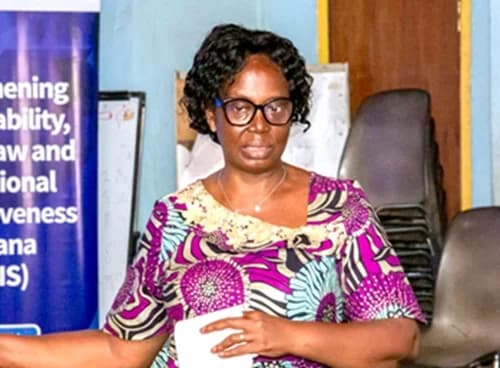
Public accountability and governance reforms have taken center stage across West Africa as regional leaders and anti-corruption agencies mark the 2026 African Anti-Corruption Day. In Ghana, the Anti-Corruption Coalition (GACC) has launched a renewed push for integrity, specifically targeting the youth with the mantra "Resist, Reject, and Report Corruption." Executive Secretary Beauty Emefa Nartey emphasized that collective action is the only way to promote transparency, noting that the GACC has already reached over 23,000 students and plans to expand its anti-corruption programs to 85 districts. This call for vigilance comes as the Economic Community of West African States (ECOWAS) warns that financial crimes cost the continent over $88.6 billion annually, prompting a call for Public Account Committees to collaborate more closely with financial intelligence units.
While advocacy grows, a major bureaucratic scandal in Nigeria has underscored the severe consequences of systemic lapses. The Presidential Foreign Intervention Promotion Council (PFIPC), which operated with government offices, a official website, and civil servants, was recently revealed to be a "phantom agency" with no legal basis. Despite its lack of legitimacy, the PFIPC was included in Nigeria’s 2026 national budget with an allocation of 1.3 billion naira (nearly $1 million). The agency’s director, Prince Adeniyi Adeyemi Matthew, is currently in hiding following allegations that he used a forged appointment letter to secure his position. The scandal has prompted calls for an independent judicial inquiry into how multiple government layers were bypassed to legitimize a nonexistent federal body.
Back in Ghana, efforts to tighten public financial management are showing tangible results, though institutional challenges remain. The 2025 Public Financial Management (PFM) Compliance League Table revealed a significant rise in the national average compliance score from 33% in 2024 to 56.2%. The Bia East District Assembly emerged as the top performer, followed by Nkwanta South and Asokwa. To further reduce public sector infractions, Deputy Finance Minister Thomas Nyarko Ampem recently swore in Conrad Z. Dumbah as the new Director-General of the Internal Audit Agency (IAA). Dumbah is tasked with strengthening internal audit systems to align with President John Dramani Mahama’s governance agenda and ensuring the prudent management of state resources.
Institutional integrity is also being challenged from within the Electoral Commission (EC) of Ghana, where the Staff Union is demanding sweeping governance reforms. Led by Chairman Richard Agorkor, the union has petitioned EC Chairperson Jean Mensa to restore collective decision-making and decentralize authority. Their demands include halting the recruitment of a Director of Finance until proper approvals are met and appointing more permanent staff to ensure the Commission’s independence. These developments across the sub-region highlight a critical period of transition, where the success of governance depends equally on the appointment of competent leaders, the vigilance of the youth, and the rigorous auditing of bureaucratic structures to prevent the emergence of fraudulent entities.
This story touches markets covered on Anansi Intelligence ↗.
More from politics
Continue exploring similar stories


