Ghana News AI
HomeBriefsAsk GhanaAnalysisTopicsAbout
•
•

Stay Informed

Get AI-curated news briefs from Ghana delivered to your inbox every morning. Free forever, no spam.

Explore

  • Home
  • Briefs
  • About

Categories

  • Politics
  • Business
  • Sports
  • Entertainment
  • Africa

Features

  • Analysis
  • Cedi Rates
  • Dollar to Cedi
  • Ghana Gold Price

Topics

  • All Topics
  • Armed Forces Recruitment
  • Immigration Service Recruitment
  • Fire Service Recruitment
  • Prisons Service Recruitment
  • Customs Recruitment
  • WAEC Results & News
  • Ghana Education Service

Legal

  • Privacy Policy
  • Terms of Service
Ghana News AI© 2026 Ghana News AI. All rights reserved.
Made withfor Ghana
politics

Supreme Court to Rule on Constitutional Challenge to Political Delegate System Amidst Warnings of Institutional Decay

Yesterday•3 min read•13 sources
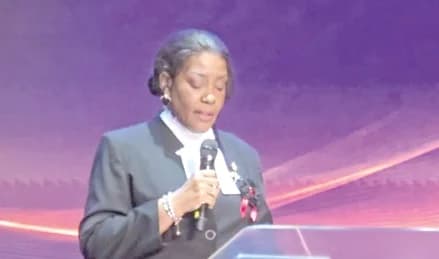
Efua Ghartey, President of the Ghana Bar Association, delivering her address at the 44th anniversary remembrance service
  1. Home
  2. /Politics
  3. /Supreme Court to Rule on Constitutional Challenge to Political Delegate System Amidst Warnings of Institutional Decay

Ghana’s political and judicial landscape faces a pivotal moment as the Supreme Court prepares to deliver a landmark judgment on the constitutionality of the delegate system used for internal party elections. Plaintiffs, including prominent figures such as Prof. Kwabena Frimpong-Boateng and Dr. Nyaho Nyaho-Tamakloe, argue that the current system disenfranchises the broader party membership and has become a breeding ground for corruption. Often referred to as the "cocoa season," the delegate process is under fire for allegedly allowing financial inducements to dictate leadership choices. The plaintiffs are seeking a declaration that all registered party members in good standing should have the right to vote directly, a move that would fundamentally alter how political power is brokered in the country.

This legal battle unfolds against a backdrop of grave warnings from national leaders regarding Ghana's moral and institutional health. Speaking at the 44th Martyrs Day Remembrance Service, the Moderator of the General Assembly of the Presbyterian Church of Ghana, Rt Rev Dr Abraham Nana Opare Kwakye, warned that the nation is on a "sharp decline into chaos" due to rising injustice and corruption. These sentiments were echoed by Efua Ghartey, President of the Ghana Bar Association (GBA), who stressed the urgent need to insulate the judiciary from political interference. Ghartey emphasized that an independent judiciary remains the nation’s last hope for maintaining the rule of law and protecting the democratic fabric of society.

Concerns over accountability are further intensified by ongoing high-profile legal proceedings involving the alleged misappropriation of state funds. In court, investigators from the Economic and Organised Crime Office (EOCO) recently testified that the assets of former National Survey and Beekeeping (NSB) Director-General, Kwabena Adu-Boahen, are wildly inconsistent with his documented earnings. Prosecutors allege that Adu-Boahen and his wife were involved in the misappropriation of GH"49.1 million. Simultaneously, the Ministry of the Interior has had to provide assurances regarding the secure custody of former MASLOC CEO Sedina Tamakloe Attionu, who is currently serving a 10-year sentence for stealing and money laundering, despite skepticism from opposition groups.

To address the systemic roots of these irregularities, policy experts are advocating for a radical reconstruction of Ghana’s public procurement framework. Dr. Kankson Kpentey has proposed the establishment of a Government of Ghana Procurement Organisation (GOGPO) that would report directly to Parliament rather than the Finance Ministry. With Auditor-General reports citing GH"18.42 billion in financial irregularities for 2024 alone, such reforms aim to implement "No-Budget-No-Procurement" controls and advanced technology platforms. Advocates argue that plugging these leaks is not merely a matter of law, but a critical economic necessity that could significantly boost the nation's GDP and restore public trust in governance.

Our Take

From the Team

Coming Soon

Our team will add key insights, trends, and actionable takeaways to help you stay informed faster.

This story touches markets covered on Anansi Intelligence ↗.

More from politics

Continue exploring similar stories

NCCE Refutes GH¢144m Budget Freeze as Infrastructure Milestones and Political Accountability Drive National Discourse
politics|Yesterday

NCCE Refutes GH¢144m Budget Freeze as Infrastructure Milestones and Political Accountability Drive National Discourse

The National Commission for Civic Education (NCCE) has formally dismissed reports suggesting a total freeze of its 2026 budget, clarifying that its operations remain active despite significant financial constraints. Addressing claims that a GH¢144.6 million allocation had been withheld, the Commission labeled such reports as misleading and emphasized that bureaucratic delays in public funding are common. The NCCE reiterated its commitment to democratic education, noting that ongoing partnerships with various organizations have allowed it to continue its constitutional mandate. This clarification comes at a critical time for state institutions as the government faces increasing pressure to maintain public services and transparency ahead of future administrative cycles. In the realm of national infrastructure and accountability, the Ghana Armed Forces (GAF) reported a major milestone in the Accra-Kumasi Expressway project, with over 50% of the corridor—totaling 89.5 kilometers—now cleared. Project coordinator Col Alex Twumasi indicated that the clearing phase is expected to be completed within 20 weeks, promising to ease congestion between the nation's two largest cities. Simultaneously, the Ministry of Transport is preparing an official response to concerns raised by the New Patriotic Party (NPP) regarding the acquisition of refurbished diesel locomotives and freight wagons. Transport Minister Joseph Bukari Nikpe emphasized the importance of constructive dialogue in addressing questions over the age and cost of the equipment, while also managing the impacts of recent flooding on national transport networks. Political tensions and social advocacy have also intensified, highlighted by the Minority Women’s Caucus in Parliament condemning a violent attack on former Dome-Kwabenya MP Sarah Adwoa Safo. The caucus has demanded a full and impartial police investigation, asserting that such violence undermines the safety and dignity of women in leadership. This call for accountability is mirrored in the grassroots sector, where relocated Takoradi Market traders have threatened to stop paying tolls in protest of the five-year delay in the market's redevelopment. The traders, represented by Madam Lamisi Adam, cited mounting debts and deteriorating health as direct consequences of the stalled project and poor conditions at their temporary site. As the political landscape evolves, new voices and organizational disputes are emerging. Political commentator Kwame Asare Obeng, popularly known as A Plus, has publicly urged Ghanaians to reject presidential candidates over the age of 60, advocating for a transition to younger leadership. Meanwhile, the newly formed political group 'The Base Ghana First' has disowned a viral announcement regarding a public walk scheduled for July 3, 2026, citing name confusion with an unaffiliated group and threatening legal action. These internal disputes and shifts in discourse coincide with efforts by the Centre for Journalism Innovation and Development (CJID) to host a media summit in Accra, focusing on the role of fact-checking and the fight against disinformation in defending West African democracy.

Government Launches Nationwide Enforcement Against Illegal Mining and Waterway Encroachments to Curb Flooding
politics|Yesterday

Government Launches Nationwide Enforcement Against Illegal Mining and Waterway Encroachments to Curb Flooding

The Government of Ghana has intensified its crackdown on illegal mining and unauthorized construction on waterways in a major effort to mitigate recurring flooding and environmental degradation. In the Ashanti Region, the Regional Minister, Dr. Frank Amoakohene, has announced an imminent demolition exercise targeting structures built on waterways, specifically in areas such as Asokwa near the Kwame Nkrumah University of Science and Technology (KNUST). This directive follows growing concerns over human activities that obstruct natural drainage systems, which was highlighted during a National Day of Prayers event where religious leaders like Apostle Johannes Vegba called for a re-examination of national values to combat corruption and apathy in land management. Concurrent with the demolition plans, the Anti-Illegal Mining Task Force successfully conducted a raid on an illegal mining site located near the Adansi Asokwa Hospital in the Ashanti Region. Acting on a timely tip-off from a whistleblower, the task force impounded two excavators and a pickup truck. Although the suspects fled the scene upon the arrival of authorities, the Ashanti Regional Minister confirmed that investigations are ongoing to identify the perpetrators. The degraded land is slated for restoration under a government-led reclamation initiative, with the Minister emphasizing that the land will be returned to the state to support the future expansion of hospital services. In the capital, the Ministry of Works, Housing, and Water Resources has unveiled a separate plan to reclaim six critical wetlands through the demolition of illegal structures. This decision comes in the wake of devastating floods in Accra that resulted in 10 fatalities and affected over 7,700 households. The government maintains that reclaiming these natural buffers is essential for the long-term safety of the city's residents. Meanwhile, the crisis has sparked a debate over institutional accountability, with Nana Yaa Jantuah, a staffer at the Jubilee House, publicly criticizing the Ghana Meteorological Agency (GMet) for failing to provide adequate weather communications that could have alerted citizens to the severity of the recent rains. These coordinated actions across the Ashanti and Greater Accra regions signal a more aggressive stance by the state against environmental offenses that threaten public infrastructure and human life. While the Ashanti Regional Minister has promised to engage property owners and establish support systems for those displaced by the demolitions, the emphasis remains on strict law enforcement and land reclamation. Moving forward, the government is urging continued public vigilance and whistleblowing to support the task force in identifying illegal mining operations and preventing further encroachment on protected ecological zones.

Jurgen Heissel (left), the Austrian Ambassador to Ghana, with Levinia Addae-Mensah, Executive Director of WANEP, displaying the IGET logo
politics|Yesterday

Ghana Charts Path for Socio-Economic Transformation Through PEARL Initiative, Ho Declaration, and Youth Empowerment

Ghana is embarking on a multi-faceted drive toward national development and institutional reform, anchored by high-level policy initiatives and a renewed focus on inclusive governance. At the forefront of this transformation is the PEARL framework, a strategic initiative pledged by President John Dramani Mahama to mobilize US$11.5 billion in investments. Centered initially on the Upper East Region, the framework aims to create 1.7 million jobs through enhanced irrigation schemes and the establishment of robust educational and healthcare facilities. This economic push is complemented by the conclusion of the 2026 National Labour Conference in Ho, where government, employers, and organized labor adopted the 'Ho Declaration.' The declaration introduces pivotal reforms, including the establishment of an Independent Emoluments Commission and public sector remuneration restructuring to ensure industrial harmony and sustainable growth. Parallel to these economic frameworks, there is a growing consensus on the necessity of youth inclusion within the political sphere. During the West Africa Youth Summit in Accra, Levinia Addae-Mensah, Executive Director of the West Africa Network for Peacebuilding (WANEP), called for an end to tokenism, urging that youth be given genuine decision-making roles to strengthen democracy. This sentiment was echoed by Austrian Ambassador J'fcrgen Heissel, who emphasized that sustainable peace relies on intergenerational mentorship and collaborative policy-making. These calls for inclusion extend to local governance, as evidenced by the Lambussie District Assembly's election of Mr. Abdul-Sallam Hanebe Iddrisu Bamie as Presiding Member. After seven rounds of voting, Bamie, the CEO of Sonzele Rural Bank, committed to an open-door administration focused on fostering district-wide development. Institutional excellence and agricultural sustainability also remain pillars of the national agenda. International IDEA recently honored Isaac Adjin Bonney for his six-year tenure as Chair of the Finance and Audit Committee, noting his leadership in navigating global financial complexities. Simultaneously, the Minister of Food and Agriculture, Eric Opoku, launched the 42nd National Farmers’ Day under the theme "Our Farmers, Our Food, Our Future." The celebration underscores the government's commitment to food security as a cornerstone of economic stability. Furthermore, efforts to attract foreign investment continue through diplomatic channels, with the First Deputy Speaker of Parliament, Bernard Ahiafor, urging Ghanaians in the diaspora to contribute to the nation's progress. Together, these developments reflect a comprehensive approach to governance, combining infrastructure investment, labor reform, and the empowerment of local and youth voices to secure Ghana's future.

Samuel Nartey George (left) with Simone Giger proposing  a toast at the 735th National Day celebration programme
politics|Yesterday

Sudan Military Gains, Zimbabwe Term Extensions, and Burkina Faso's Diplomatic Shift Highlight Regional Volatility

Global political landscapes are undergoing significant shifts as regional conflicts intensify and long-standing diplomatic alliances are redefined. In Sudan, the military has achieved a strategic victory in the Darfur region amidst a deteriorating humanitarian situation that has drawn urgent international attention. The Sudanese army recently announced the recapture of Kulbus, a strategic town in western Darfur near the Chadian border. This marks the military's most significant gain since the fall of El-Fasher and comes at a time when the conflict is increasingly driven by a complex war economy. Military spending has surged to approximately $4 billion annually, fueled by gold smuggling and new technological interventions like drone warfare. In response to the escalating crisis in el-Obeid and North Kordofan, where 500,000 civilians are at risk, the United Nations Human Rights Council has scheduled an urgent meeting in Geneva following a formal request by a coalition of European nations including Germany and the United Kingdom. Governance and sovereignty issues have also taken center stage in Zimbabwe and Burkina Faso, marking a period of profound transition. The Zimbabwean parliament has approved sweeping constitutional amendments that would extend President Emmerson Mnangagwa’s term by two years and eliminate direct presidential elections, a move that has sparked intense criticism from opposition groups. Further north, Burkina Faso’s military-led government has officially severed diplomatic relations with France, citing interference in national interests. This rupture, which follows the expulsion of French troops earlier this year, sees the junta pivoting toward new alliances with Russia and Turkey. While the junta maintained that social ties between the two nations remain intact, the diplomatic break marks the end of an era for French influence in the region. Within Ghana, the focus remains on traditional stability and the strengthening of international partnerships. The Overlord of the Gonja Kingdom, Yagbonwura Bii-Kunuto Jewu Soale I, recently reaffirmed the enduring bond between the Gonja and Ashanti kingdoms during a visit to Manhyia Palace. This diplomatic effort emphasizes the role of traditional authorities in peace-building and the resolution of contemporary challenges like land disputes. On the international front, Switzerland has reaffirmed its commitment to deepening bilateral relations with Ghana. Swiss Ambassador Simone Giger highlighted the potential of Ghana's youth and ongoing cooperation in cocoa and renewable energy, though she expressed significant concerns regarding the environmental damage caused by illegal mining activities. Tragically, the darker side of political polarization was underscored in Greece, where political violence has claimed a life. Vagia Nestora, the mother of a New Democracy party politician, died following a suspected arson attack in Thessaloniki. The attack, which involved improvised incendiary devices targeting party officials, was condemned by Prime Minister Kyriakos Mitsotakis as an inhumane act of terrorism. Greece’s Counter-Terrorism Service is currently investigating the incident as the country joins a list of nations grappling with internal instability. These diverse events collectively highlight a global climate of political volatility, where the struggle for power frequently intersects with humanitarian concerns and the delicate need for diplomatic and traditional mediation.

All
africa
business
education
entertainment
health
news
politics
sports
technology