••
Political Transitions and Accountability: Equatorial Guinea Government Resigns as DR Congo and CAR Face Leadership Turmoil
•3 min read•12 sources
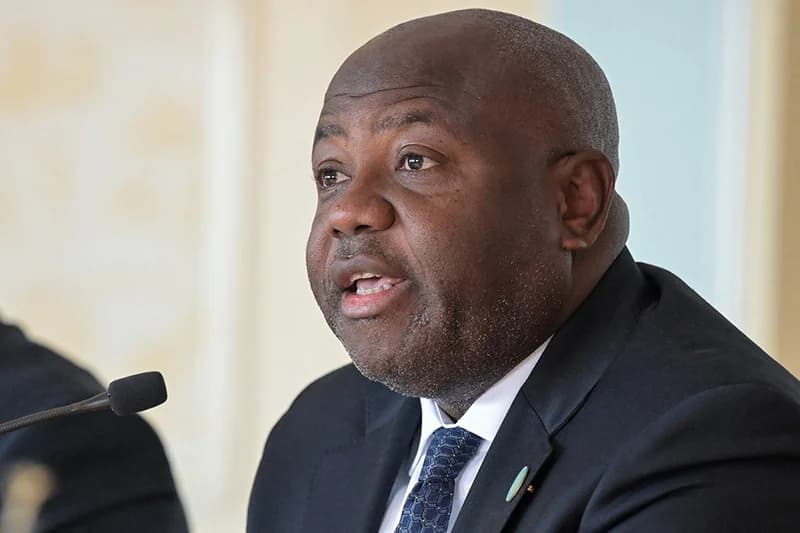
Central and West Africa are witnessing a wave of significant political and legal shifts, headlined by the mass resignation of Equatorial Guinea's government and a controversial constitutional move in the Democratic Republic of Congo (DRC). In Equatorial Guinea, the administration led by Prime Minister Manuel Osa Nsue Nsua has officially stepped down following a scathing assessment from the presidency. Vice-President Teodoro Nguema Obiang Mangue revealed that the government had failed to achieve even 10% of its national development targets. President Teodoro Obiang Nguema Mbasogo, the world’s longest-serving leader who has held power since 1979, criticized the outgoing cabinet for fostering corruption, misusing state resources, and failing to diversify the nation’s oil-dependent economy. The ruling Democratic Party of Equatorial Guinea (PDGE) framed the move as a routine reorganization to align with new state priorities, though analysts suggest the change reflects deep-seated economic struggles and poverty despite the nation's petroleum wealth.
Simultaneously, the Democratic Republic of Congo is facing potential internal division after its Senate approved a controversial constitutional bill that could allow President Felix Tshisekedi to seek a third term in office. While the bill passed with 89 votes in favor, the move has sparked intense backlash from opposition figures and the public. Recent protests against the term-limit extension turned violent, with reports of police using tear gas and live ammunition against demonstrators. If signed into law by the president, the bill would fundamentally alter the DRC's political landscape ahead of the 2028 elections, raising concerns about the erosion of democratic norms in a region already grappling with leadership longevity.
Legal accountability for past leadership is also taking center stage in the Central African Republic (CAR), where a UN-backed Special Criminal Court has opened the trial of former President Francois Bozizé. Charged with crimes against humanity committed between 2009 and 2013—including murder and torture—Bozizé is being tried in absentia as he remains in exile in Guinea-Bissau. The court proceedings highlight a significant step toward justice for atrocities committed during the country’s civil war, which followed Bozizé’s removal from power in 2013. This trial serves as a rare instance of a domestic, internationally supported court pursuing high-ranking officials for war crimes in the region.
Amidst these political and legal upheavals, Nigeria’s military has reported major successes in its ongoing internal security operations. Major General Michael Onoja announced that troops rescued nearly 400 kidnap victims and arrested dozens of suspected terrorists in a series of coordinated raids across the North West and North East. These operations, which included the dramatic rescue of 360 civilians held by Boko Haram, underscore the persistent security challenges that continue to plague West Africa’s most populous nation. Taken together, these developments across Equatorial Guinea, the DRC, CAR, and Nigeria illustrate a continent in flux, where the struggle for economic stability and democratic accountability remains a central theme for regional governance.
This story touches markets covered on Anansi Intelligence ↗.
More from politics
Continue exploring similar stories


