••
Speaker Bagbin and Ghana’s Finance Ministry Demand Urgent Reforms to Halt the Monetization of African Politics
•3 min read•16 sources
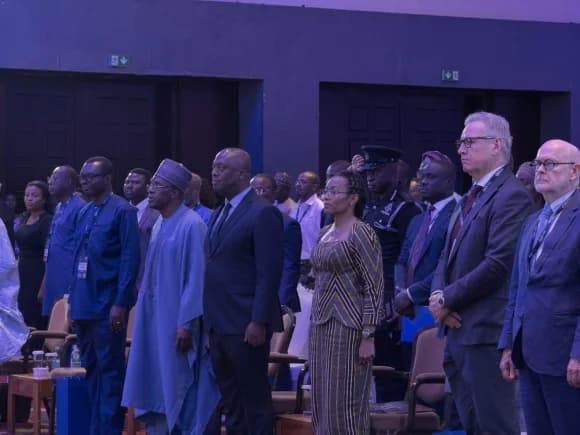
Ghanaian leadership and anti-corruption advocates are sounding an urgent alarm over the escalating influence of money in politics, warning that the 'financialization' of democratic processes is sidelining ordinary citizens and undermining the integrity of governance across Africa. Speaking at the High-Level Regional Convening on the Financialization of Politics in Accra, the Speaker of Parliament, Alban Sumana Kingsford Bagbin, and Deputy Minister for Finance, Thomas Nyarko Ampem, cautioned that rising political costs are creating insurmountable barriers for women, youth, and capable leaders without deep pockets. This trend, they argued, transforms democracy into a marketplace where financial power overshadows public service commitment, leading to widespread public distrust and civic disengagement.
To combat these challenges, Deputy Minister Ampem emphasized the necessity of a comprehensive legal framework for political financing. While Ghana has introduced measures such as the Conduct of Public Officers Bill and a National Ethics and Anti-Corruption Action Plan, officials acknowledge that more robust transparency is required to curb opaque funding practices, vote-buying, and illicit financial flows. Kwame Edem Senanu, Chairperson of the African Union Advisory Board Against Corruption, echoed these calls, revealing that the AU is drafting a model law on political party financing to assist the 49 member states that have ratified the anti-corruption convention. These stakeholders argue that unregulated financial practices lead to state capture and distort electoral processes, making reform a critical developmental priority.
Beyond legal and legislative frameworks, Speaker Bagbin has proposed a shift toward 'moral infrastructure,' asserting that corruption is fundamentally a moral deficiency that cannot be solved by legal sanctions alone. Speaking at a National Development Conference organized by the Church of Pentecost, Bagbin argued that the greatest infrastructure a nation can build is the character of its people. He urged a national renewal centered on integrity, calling for public servants to place service above self-interest and for political leaders to prioritize national progress over partisan gain. This sentiment was supported by the Minister of Local Government, Ahmed Ibrahim, who noted a worrying moral decline in society that requires a values-based intervention.
Complementing these high-level calls for reform, the Ghana Anti-Corruption Coalition (GACC) is targeting the younger generation to foster a culture of integrity. During African Union Anti-Corruption Day celebrations, GACC officials reached out to thousands of students across dozens of districts, encouraging them to adopt the 'three Rs'—Refuse, Reject, and Report—when faced with corruption. By linking corruption to tangible consequences like poor public infrastructure and safety hazards, the GACC aims to instill accountability in future leaders. Collectively, these efforts represent a multi-tiered approach to safeguarding democracy, combining legislative reform, moral leadership, and grassroots education to ensure that merit, rather than money, defines the future of African governance.
This story touches markets covered on Anansi Intelligence ↗.
More from politics
Continue exploring similar stories


