••
Speaker Alban Bagbin and Regional Leaders Warn Against Rising Political Monetization and Corruption
•3 min read•16 sources
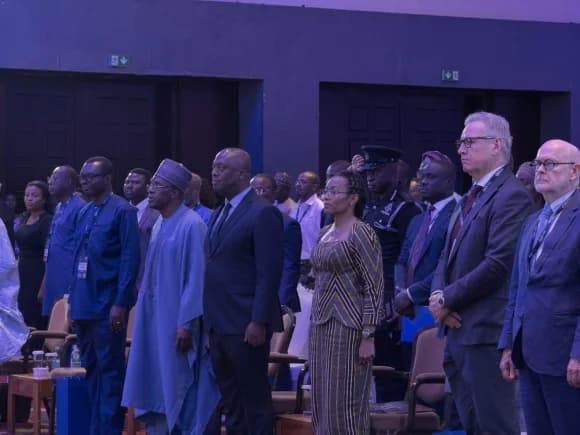
Ghana’s Speaker of Parliament, Alban Sumana Kingsford Bagbin, and senior regional officials have issued a stark warning regarding the escalating influence of money in politics, arguing that the “financialization” of the democratic process is alienating ordinary citizens and undermining the integrity of governance across Africa. Speaking at the High-Level Regional Convening on the Financialization of Politics in Africa held in Accra, Bagbin emphasized that the rising costs of political participation have shifted the focus from ideas and public service to financial power. This trend, he noted, creates a distortion of democracy where only the wealthy can compete, leading to widespread public distrust and civic disengagement. He called for practical reforms in political financing to improve transparency and safeguard democratic integrity globally.
Deputy Minister for Finance, Thomas Nyarko Ampem, echoed these concerns, calling for urgent reforms to political financing laws to ensure that capable individuals—particularly women and youth—are not barred from leadership by exorbitant electoral costs. Ampem highlighted that the lack of a comprehensive legal framework for political financing remains a critical gap in Ghana’s governance. While the government is pursuing initiatives like the Conduct of Public Officers Bill and the National Ethics and Anti-Corruption Action Plan to enhance transparency, he asserted that reforming how political activities are funded is a developmental necessity. Adding a regional perspective, Kwame Edem Senanu, Chairperson of the African Union Advisory Board Against Corruption, revealed that the AU is drafting a model law on political finance to assist the 49 member states that have ratified the anti-corruption convention in curbing unregulated financial practices and state capture.
Beyond legislative frameworks, Speaker Bagbin underscored the moral dimensions of the crisis during a National Development Conference organized by the Church of Pentecost. He argued that the “greatest infrastructure any nation can build is the character of its people,” asserting that corruption cannot be defeated through legal sanctions alone as it is fundamentally a moral deficiency. Bagbin called for a national renewal centered on integrity, urging Ghanaians to support leaders who prioritize national interest over partisan gain and to nurture a generation of public servants who value truth over self-interest. This sentiment was supported by the Minister of Local Government, Ahmed Ibrahim, who expressed concern over a perceived moral decline within the nation’s education sector and broader society.
Complementing these high-level calls for reform, the Ghana Anti-Corruption Coalition (GACC) has intensified its grassroots efforts, targeting the youth as the vanguard of a corruption-free future. Marking African Union Anti-Corruption Day, GACC Executive Secretary Mrs. Beauty Emefa Narteh and regional focal person Mr. Emmanuel Anafo engaged with over 23,000 students across multiple districts, including Paga and Cape Coast. They encouraged students to adopt the “three Rs”—Refuse, Reject, and Report—when confronted with corrupt practices. By linking corruption directly to failing public infrastructure and public safety risks, the GACC aims to instill a culture of accountability and transparency. These combined efforts from the legislature, executive, and civil society signal a growing consensus that protecting Africa’s democratic future requires both structural financial reform and a fundamental moral reset.
This story touches markets covered on Anansi Intelligence ↗.
More from politics
Continue exploring similar stories


