••
Pathways to Sovereignty: African Leaders Call for Strategic Investments in Agriculture, Trade, and Job Creation
•3 min read•20 sources
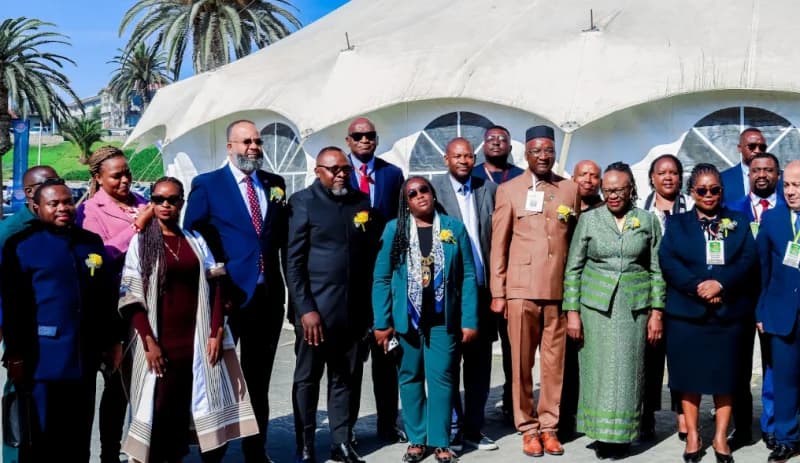
African leaders and financial experts are advocating for a fundamental shift in the continent’s economic strategy, emphasizing self-reliance and regional integration to achieve long-term sovereignty. During the West Africa Rice Investment Roundtable 2026, Vice President Prof. Naana Jane Opoku-Agyemang and Fisheries Minister Emelia Arthur underscored the urgent need for reforms in agrifood systems. They highlighted a concerning reality: despite vast natural resources, Africa spends over $50 billion annually on food imports. To counter this, the leaders called for massive investments in the rice value chain, irrigation, and the Blue Economy, aiming to transform agriculture from subsistence farming into a commercially viable, climate-smart industry that ensures regional food security.
Central to this drive for economic independence is the full implementation of the African Continental Free Trade Area (AfCFTA). Namibia’s Minister of International Relations and Trade, Selma Ashipala-Musavyi, recently urged nations to embrace the framework as a tool to reduce dependence on external markets. With intra-African trade currently standing at a modest 16%, Ashipala-Musavyi argued that the AfCFTA represents the continent’s best chance for economic transformation. She emphasized the need for robust infrastructure, support for small and medium-sized enterprises (SMEs), and the strategic inclusion of women and youth to harness the potential of a 1.4 billion-person market.
To support these industrial and trade ambitions, significant moves are being made in the financial sector to de-risk investments and foster innovation. The African Development Bank (AfDB) is set to become the largest shareholder in the African Trade and Investment Development Insurance (ATIDI) with a $125 million investment, aiming to bridge Africa's $400 billion annual development financing gap. Simultaneously, financial leaders like Darwin Mireku of Stanbic Bank are calling for a balanced approach to digital lending. Speaking at the 3i Africa Summit 2026, Mireku warned that while credit access is vital, financial innovation must prioritize sustainable customer outcomes and incorporate savings, insurance, and investment products to ensure long-term resilience.
Underpinning these economic strategies is a growing demand for government-led job creation to ensure social stability. Prominent businessman Dr. Kofi Amoah has urged African administrations to place employment at the heart of their "Reset Agendas," arguing that the private sector alone cannot address the continent's high youth unemployment. This sentiment was echoed on the diplomatic stage by Ghana’s Foreign Ministry during meetings in Seoul, where calls were made for enhanced economic partnerships with South Korea. By focusing on technology transfer, industrialization, and equitable trade, African leaders aim to create meaningful jobs that discourage forced migration and build a prosperous, integrated continent aligned with the African Union’s Agenda 2063.
This story touches markets covered on Anansi Intelligence ↗.
More from africa
Continue exploring similar stories


