••
Ghana Hosts Global Leaders for Landmark Reparatory Justice Conference Amid Controversy Over Macron’s Presence
•3 min read•10 sources
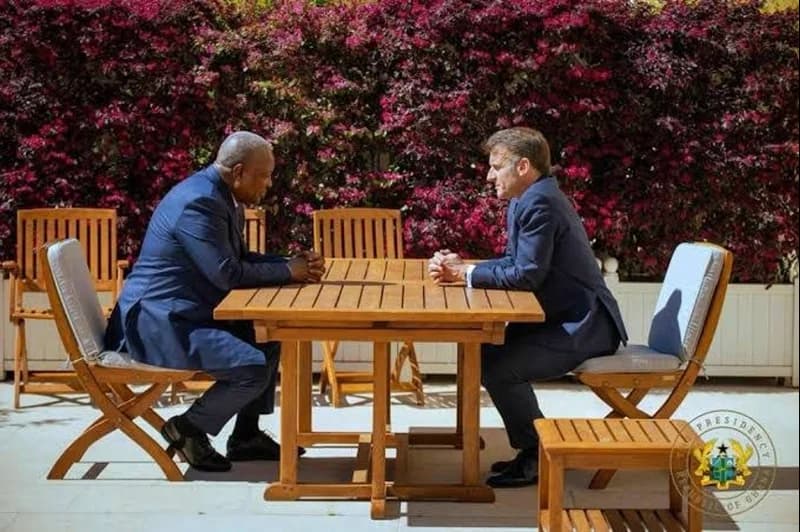
Accra has become the global epicenter for the reparatory justice movement as it hosts the Next Steps High-Level Consultative Conference from June 17 to 19, 2026. Convened by former President John Dramani Mahama in his capacity as the African Union (AU) Champion for Reparations, the summit marks a significant milestone in international efforts to address the legacy of the transatlantic slave trade. The event coincides with Juneteenth, marking the first time the historical commemoration is being officially observed outside the United States. The summit seeks to move beyond mere recognition of historical wrongs toward a tangible framework for implementation, following the landmark UN General Assembly Resolution A/RES/80/250, which designates the trafficking of enslaved Africans as a grave crime against humanity.
A distinguished cohort of African leaders and international dignitaries has arrived in the Ghanaian capital to participate in the three-day deliberations. Among the early arrivals are President Bassirou Diomaye Faye of Senegal, President Netumbo Nandi-Ndaitwah of Namibia, and the Speaker of the Algerian Parliament, Azouz Nasri. These leaders, alongside various heads of state from the Caribbean and Africa, are expected to engage in panels and high-level dialogues focused on accountability, restitution, and international cooperation. The conference features an art exhibition dedicated to the history of slavery and aims to produce a comprehensive report for the UN Secretary-General, alongside the establishment of new advisory panels to guide global advocacy.
However, the summit is not without significant friction, primarily centered on the invitation extended to French President Emmanuel Macron. Critics and civil society groups, most notably the Ho Collective of the Socialist Movement of Ghana, have described Macron’s participation as a "PR vehicle" for France to rehabilitate its image without offering genuine accountability. Opponents argue that Macron’s presence is an affront to the movement, citing France’s historical role in the slave trade, its implementation of the Code Noir, and its recent abstention from UN resolutions condemning slavery. The invitation has also drawn fire toward President Mahama, with critics questioning the wisdom of giving a platform to a nation they accuse of maintaining neocolonial relations in Africa.
Despite these controversies, the organizers maintain that the conference is a critical step in turning global consensus into actionable policies. By bringing together political leaders, policymakers, and activists, the summit aims to build a unified front for reparatory justice that can influence international law and economic policy. As the sessions continue at the Kempinski Hotel, the focus remains on whether the gathering can successfully bridge the gap between historical grievances and modern-day restitution, ensuring that the dignity of the descendants of enslaved Africans is upheld through concrete global commitments.
This story touches markets covered on Anansi Intelligence ↗.
Related topic
John Mahama: Latest News & Updates →More from politics
Continue exploring similar stories


