••
Wa Community in Shock After 70-Year-Old Tindamba Primary School Demolished for New Market Project
•3 min read•7 sources
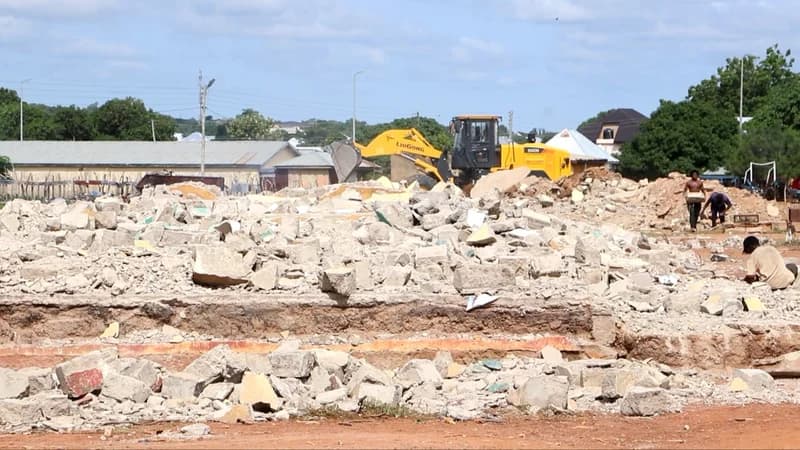
Residents of Wa were met with a shocking sight as the 70-year-old Tindamba Primary School was reduced to rubble in a midnight demolition operation. The exercise, carried out at approximately 2:00 a.m. on a Saturday, was executed to clear land for a government-sponsored market project under a new national market policy. The move has sparked widespread condemnation from local leaders and community members, leaving over 200 pupils without a permanent place of learning and bringing an abrupt end to decades of educational history in the Upper West regional capital. The school, which had served the community for seven decades, had nurtured generations of prominent citizens, including a Supreme Court Justice. The impact on the student population has been immediate and severe. Before the demolition and the subsequent uncertainty, the school served over 400 students; however, following the relocation of pupils to nearby facilities under suboptimal conditions, enrollment has plummeted to just 214. Community members have expressed deep sorrow over the loss of the institution, noting that the temporary learning environments are inadequate and discourage parents from keeping their children in the school. The sudden destruction of the facility has raised significant concerns about the future of education in the area and the perceived prioritization of commercial interests over human capital development. Charles Agbeve, the Vice Chairman of Parliament's Select Committee on Local Government and Rural Development, described the demolition as both unfortunate and shocking. During a review of the situation, Agbeve highlighted that the crisis was exacerbated by long-standing land ownership disputes that the local assembly failed to resolve in favor of the school. He emphasized that the demolition might have been avoided if the Ghana Education Service (GES) had properly secured and registered the land title. Agbeve urged local government assemblies across the country to prioritize the legal protection of school lands to prevent similar incidents where educational infrastructure is sacrificed for alternative developments. While the government’s market initiative is part of a broader economic development strategy, the destruction of Tindamba Primary has left a void in the community's educational heritage. Although some legal disputes regarding the land were reportedly settled out of court prior to the bulldozers arriving, the community remains resentful over the loss of their landmark institution. The situation serves as a stark reminder of the administrative vulnerabilities facing public schools in Ghana, where the lack of formal land titles continues to leave students and their educational legacies at risk of displacement.
This story touches markets covered on Anansi Intelligence ↗.
Related topic
Ghana Education Service (GES): Latest News Today →More from education
Continue exploring similar stories


