••
The leadership of the Kristo Asafo Mission remains in a state of legal and familial flux following the reading of the late Apostle Emeritus Professor Ing. Kwadwo Safo's will. While initial reports suggested that Israel Nana Kwadwo Safo Akofena had been confirmed as the successor to the Kantanka empire, prominent legal voices have since contested this interpretation. Lawyer Kwame Akuffo, representing six of the founder's children, and Nana Kofi Safo Kantanka, lawyer for the mission, have both clarified that the will designates Akofena only as the head of the Safo family, not as the leader of the church. They argue that church leadership is governed by the Kristo Asafo constitution rather than a personal will, leading to plans for a judicial interpretation to resolve the burgeoning dispute. The tension has already seen tragic consequences, including a shooting incident at Akofena’s residence that left former MP Sarah Adwoa Safo in critical condition.
Adding to the discourse on religious influence, Prophet Kumchacha, founder of Heaven’s Gate Ministries, has publicly praised President John Dramani Mahama’s administration for significant economic improvements. During an interview on Hitz FM, Kumchacha asserted that religious leaders in Ghana wield more power than politicians to influence electoral outcomes, claiming that church members follow their pastors' directives closely. This sentiment was echoed in his account of rallying support for President Mahama during the 2024 campaign, highlighting the potent intersection of faith and political mobilization in the country. Meanwhile, fashion entrepreneur Osebo the Zaraman has retracted previous statements regarding the succession, admitting he misunderstood the will's contents.
In a concurrent address at the Assemblies of God Church Faith Conference, President Mahama emphasized the importance of character and integrity over titles or wealth. He urged Ghanaians to demonstrate their faith through accountable leadership and family values, addressing challenges such as moral confusion in modern society. This call for moral steadfastness was mirrored by the Okyenhene, Osagyefuo Amoatia Ofori Panin, who during the 2026 Kyebi Ohum Festival urged citizens to change their environmental attitudes to curb devastating flooding. The Okyenhene also raised concerns about drug abuse among the youth and called for stricter law enforcement, while the Chief of Staff, Julius Debrah, proposed agricultural collaborations to boost the local economy.
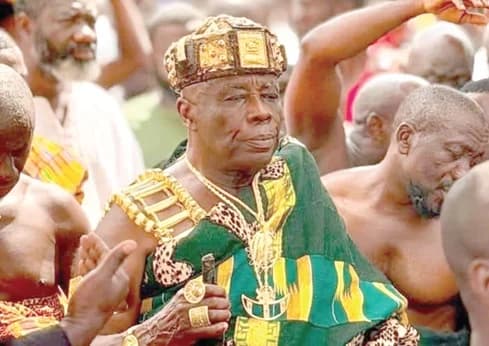
On the traditional front, the Gonja and Asante kingdoms demonstrated a unified front as Yagbonwura Bii-Kunuto Jewu Soale I joined the Asantehene, Otumfuo Osei Tutu II, to celebrate the fifth Awukudae of the year. The ceremony, attended by hundreds of representatives, focused on preserving cultural heritage and enhancing socio-economic development through tourism. As the Kristo Asafo Mission navigates its leadership crisis, these broader calls for unity and ethical leadership from both political and traditional figures provide a complex backdrop to the internal struggle for the future of one of Ghana’s most prominent indigenous religious and industrial institutions.
This story touches markets covered on Anansi Intelligence ↗.
Continue exploring similar stories


