••

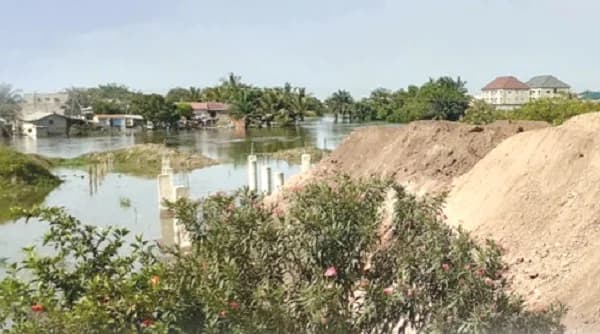
The Government of Ghana and various state agencies have launched a series of aggressive infrastructure and regulatory measures aimed at urban renewal and economic revitalization. In a significant move toward flood mitigation, the Presidency and the Flood Mitigation Task Force, led by Brigadier General Forster Okae Yeboah, have announced the imminent demolition of illegal structures around the Tesa Dam and Kpeshie Lagoon in the Greater Accra Region. This initiative is mirrored in the Kpone Katamanso Municipality, where Municipal Chief Executive Samuel T. K. Morton has identified 14 structures on waterways for removal. However, these enforcement efforts face internal criticism; the Local Government Service Association of Physical Planners (LoGSAPP) has accused some Assemblies of undermining national planning laws by collecting penalty fees from wetland encroachers instead of enforcing mandatory demolition orders, a practice LoGSAPP claims encourages unplanned development and worsens flooding.
In the transport sector, a controversy has erupted over the government's efforts to revitalize the railway industry. While Transport Minister Joseph Bukari Nikpe announced the acquisition of two new locomotives and 20 wagons to enhance freight efficiency, a public dispute has emerged regarding the quality of these assets. Former MP Samuel Ayeh-Paye criticized the Tema–Mpakadan locomotives as "outdated" and predicted they would be obsolete within three years. These claims were sharply refuted by Ghana Railway Development Authority (GRDA) CEO Dr. Frederick Appoh, who maintained that the equipment meets international standards with a 15-year lifespan. Amidst this technical debate, the GRDA confirmed a $21 million EU grant to support ongoing railway development, highlighting the sector's central role in the national economic strategy.
Local infrastructure projects across the Volta Region present a mixed landscape of progress and public frustration. In Hohoe, Member of Parliament Thomas Worlanyo Tsekpo has officially cut sod for the construction of the Wegbe-Akplamafu and Segbedeme bridges, projects funded by the Ghana Road Fund to improve safety and market access. Conversely, residents in the North Dayi District have expressed profound anger over abandoned road projects under the "Big Push Infrastructure Programme." Locals report that stalled construction on the Anfoega-Wodamaxe Aveti and Vakpo-Wusuta roads has caused severe flooding, displacing families and destroying livelihoods. Similarly, in Ho West, District Chief Executive Francis Profer Dusey has had to appeal for calm and patience from Akome residents planning to demonstrate over the slow reconstruction of the collapsed Dzolokpuita–Akome Bridge.
Adding to the landscape of political scrutiny, the Ghana National Gas Company (Ghana Gas) has been forced to defend its reputation against allegations of an inflated property acquisition in Airport West, Accra. Current management clarified that the purchase of the Osibisa Close property occurred under a previous administration and is currently the subject of an investigation by the Economic and Organised Crime Office (EOCO). As the government balances these transparency concerns with its ambitious infrastructure agenda, the coming months will be critical for demonstrating that both the demolition of illegal structures and the completion of stalled regional projects can be executed with the accountability and speed demanded by the Ghanaian public.
This story touches markets covered on Anansi Intelligence ↗.
Continue exploring similar stories


