••
Education Minister Haruna Iddrisu Reveals 90,000 Teacher Deficit in Ghana Amid Budgetary Constraints
•2 min read•10 sources
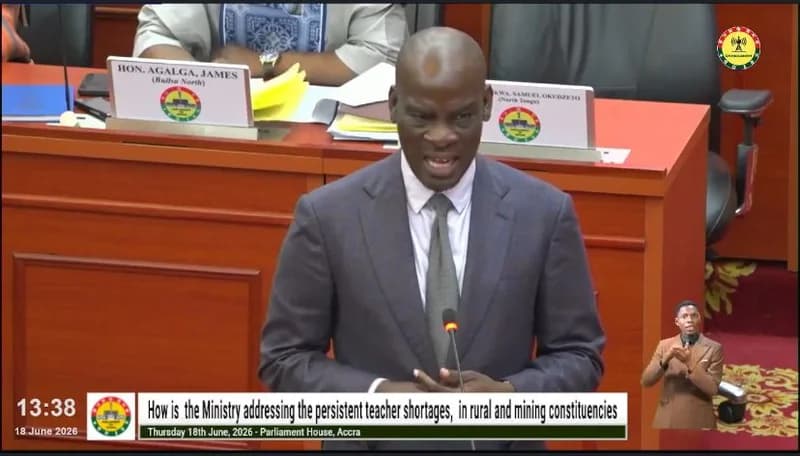
Ghana’s Education Minister, Haruna Iddrisu, has sounded an alarm over a critical staffing crisis in the nation’s education sector, revealing a staggering deficit of between 50,000 and 90,000 teachers. Addressing Parliament on June 18, 2026, the Minister disclosed that while the demand for educators has skyrocketed due to recent systemic reforms, the government’s recruitment capacity is severely hindered by financial limitations. Consequently, only 7,000 new teachers have been approved for recruitment this year—a figure that represents less than 15% of the minimum required personnel to stabilize the sector.
The Minister attributed the widening gap to the ambitious restructuring of Ghana’s educational landscape, including the establishment and expansion of the Commission for Technical and Vocational Education and Training (CTVET) and the Ghana Education Service (GES). These reforms were designed to enhance the quality and reach of education across the country; however, they have inadvertently created a massive demand for specialized and general teaching staff that the current national budget cannot support. Iddrisu emphasized the stark disparity between the urgent staffing needs of these institutions and the fiscal approvals granted by the treasury.
This announcement has triggered deep concern among education stakeholders and the growing backlog of unemployed trained teachers. Many graduates, who have completed their rigorous training and are awaiting placement, find themselves in a precarious position as the government struggles to fund their entry into the workforce. Stakeholders argue that the limited recruitment cycle fails to address the increasing joblessness among qualified professionals and warns of a potential decline in instructional quality. There are fears that the teacher-to-pupil ratio will worsen, particularly in rural and underserved areas where staffing is already at a breaking point.
Looking ahead, the shortage raises fundamental questions about the long-term sustainability of Ghana's educational objectives. While the government remains committed to its reform agenda, the inability to sufficiently staff schools may undermine the potential of institutions like CTVET to deliver on their specialized mandates. The Education Ministry has indicated that while future recruitment efforts will continue to be bound by budgetary limits, it is essential to find a balance between fiscal responsibility and the critical need to bolster the country’s teaching force to ensure the academic success of the next generation.
This story touches markets covered on Anansi Intelligence ↗.
Related topic
Ghana Education Service (GES): Latest News Today →More from education
Continue exploring similar stories


