••
Empowering Ghana's Future: Corporate and Educational Leaders Drive Youth Financial Literacy and Vocational Skills
•2 min read•7 sources
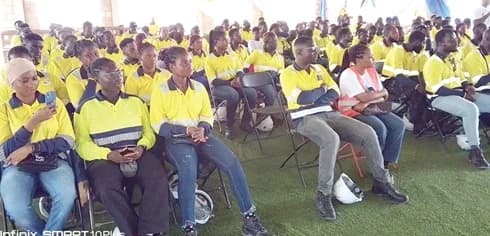
Ghana is witnessing a significant surge in youth empowerment initiatives as corporate entities, educational institutions, and non-profits unite to address unemployment and financial instability. From the launch of tailored banking platforms like Access Bank’s ‘Access U’ to intensive industrial training by the Global Institute of Mines and Safety (GIMS), the focus has shifted toward providing young Ghanaians with practical tools for economic independence. These efforts, spanning financial literacy, technical skills, and educational scholarships, aim to bridge the gap between academic theory and the evolving demands of the modern workforce.
Central to this movement is the advancement of financial intelligence. Access Bank Ghana recently unveiled ‘Access U’, a youth-centric banking platform developed in partnership with Mastercard to provide tailored financial ecosystems for students, entrepreneurs, and creatives. Michael Gyabaah, Head of Distribution at Access Bank, emphasized that the initiative moves beyond traditional banking to offer a supportive network for young innovators. Complementing this, the Centre for Financial Literacy Education (CFLE) Africa hosted its 5th National Conference, where Executive Director Peter Asare Nyarko highlighted the growing engagement of youth in savings and investment. These programs collectively advocate for curriculum reforms that prioritize practical financial skills as a cornerstone for generational wealth.
Beyond the financial sector, there is a robust push for technical and vocational excellence. In the mining sector, the Global Institute of Mines and Safety (GIMS) is transforming lives in communities like Afrisipakrom by training youth, including women, in heavy-duty machine operation. Supported by the Zijin Akyem Development Foundation, GIMS has equipped over 3,000 individuals with skills necessary for the mining and construction industries. Similarly, JS Construction is championing gender inclusion through its ‘JS Group Female Scholarship Scheme’ at Kumasi Technical University. By offering full scholarships to female students in construction-related programs and donating industrial equipment, the firm is actively working to dismantle gender barriers in male-dominated industries.
These diverse initiatives represent a coordinated effort to turn ‘idleness into industry’ and ensure that Ghana's youth are not just job seekers but value creators. Stakeholders emphasize that the sustainability of these programs relies on strong public-private partnerships and a commitment to ethical practices. As these young professionals transition into the workforce—whether as heavy-duty operators, financially savvy entrepreneurs, or construction experts—the broader implication is a more resilient national economy built on the foundations of specialized skills and financial literacy.
This story touches markets covered on Anansi Intelligence ↗.
More from business
Continue exploring similar stories

