••
Ghana Leads Global Charge as UN Declares Transatlantic Slave Trade 'Gravest Crime Against Humanity'
•3 min read•32 sources
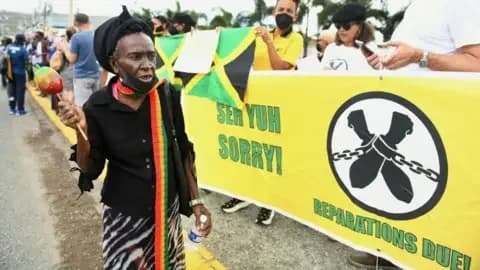
In a landmark move for historical justice, the United Nations General Assembly has adopted a resolution recognizing the Transatlantic Slave Trade as the "gravest crime against humanity." Spearheaded by Ghana under the leadership of President John Dramani Mahama, the resolution received overwhelming support with 123 votes in favor. The declaration marks a significant victory for African and Caribbean nations, establishing a formal international acknowledgment of the systemic atrocities committed over centuries and setting the stage for a structured global dialogue on reparatory justice and reconciliation.
The diplomatic achievement has, however, exposed significant fractures among global powers. While Jamaica and other African Union members celebrated the move, the United States, Israel, and Argentina voted against the resolution. Ghana's Minister of Foreign Affairs, Samuel Okudzeto Ablakwa, expressed deep disappointment in the U.S. position, labeling it a "missed golden opportunity" for the American government to show contrition for its historical role in enslavement. Meanwhile, the European Union and the United Kingdom were among 52 nations that abstained. EU Ambassador to Ghana Rune Skinnebach cited technical concerns over the wording, while in the UK, Conservative Party leader Kemi Badenoch criticized the Labour government’s abstention, arguing it potentially exposed British taxpayers to "trillions in reparations."
Domestically, the resolution has ignited a robust debate within Ghana’s Parliament regarding the nature of responsibility and the path forward. Minority Leader Alexander Afenyo-Markin sparked controversy by calling for a nuanced historical narrative that acknowledges the role of local African actors and indigenous complicity in the slave trade. In a sharp rebuttal, Majority Leader Mahama Ayariga defended the necessity of reparations, arguing that modern global economic disparities are the direct result of wealth accumulated through the forced labor of enslaved Africans. Legal experts like Oliver Barker-Vormawor have clarified that the resolution focuses on "justice, not just money," emphasizing the return of artifacts, investment in education, and historical restitution over direct cash transfers.
Adding academic weight to the discourse, Dr. Callistus Mahama emphasized that while some African kingdoms may have participated in the trade, the primary responsibility lies with the European powers that designed and profited from the systemic infrastructure of chattel slavery. He argued that participation should not be confused with the ownership of the crime itself, drawing parallels to other historical atrocities to highlight the unique moral burden of the orchestrators. This sentiment was echoed by UN Secretary-General Antonio Guterres, who noted that the resolution serves as a vital step in addressing the legacy of exploitation that continues to fuel systemic racism and inequality today.
As the international community grapples with the implications of this non-binding but symbolically potent resolution, the focus shifts to the implementation of its goals. The resolution aims to foster a new vision of global relations built on empathy and human dignity rather than the commodification of lives. For Ghana, this success reaffirms its position as a moral leader in the decolonization agenda. Moving forward, the coalition of supporting nations intends to use this UN mandate to advocate for comprehensive apologies, educational reforms, and structural development projects designed to repair the long-term socio-economic damage inflicted by the transatlantic trade.
This story touches markets covered on Anansi Intelligence ↗.
More from politics
Continue exploring similar stories


