••
Ghana’s Education Ministry Announces Massive Teacher Recruitment and Major Policy Reforms for BECE Candidates
•3 min read•22 sources
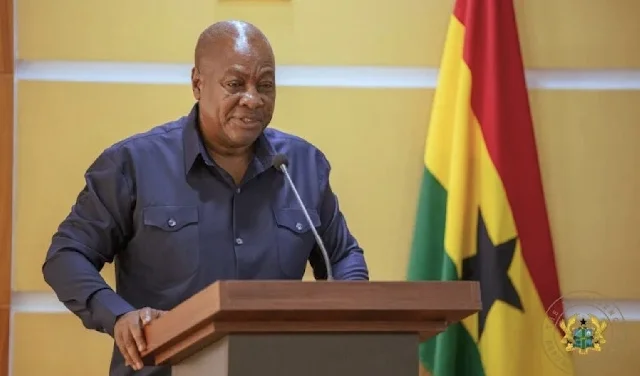
The Government of Ghana has unveiled a series of sweeping reforms and recruitment initiatives aimed at strengthening the nation’s education sector. Minister for Education, Haruna Iddrisu, announced that the Ministry has received clearance from the Ministry of Finance to recruit 7,000 new teachers to address staffing shortages, particularly in underserved and rural communities. The recruitment process, which begins on April 10, 2026, will target graduates from the 2023, 2024, and 2025 cohorts. In addition to basic education staffing, the government is set to hire 1,200 faculty members for public universities to bridge academic gaps in tertiary institutions, with successful candidates expected to be onboarded by July 1, 2026.
Alongside the recruitment drive, the Ministry is introducing a significant policy change to the Basic Education Certificate Examination (BECE) and the Computerised School Selection and Placement System (CSSPS). Under the new system, candidates will now select their preferred Senior High Schools only after their results are released. This reform provides a mandatory one-week window for students to make informed choices based on their actual academic performance, a move intended to eliminate the mismatch between student grades and school placements that previously plagued the admission process.
However, the government's infrastructure plans have met with mixed reactions. While the Ministry moves forward with plans to establish a new College of Education in Ezinlibo, Jomoro, the move has been criticized by the think tank Africa Education Watch (Eduwatch). The group argues that the project lacks empirical justification, noting that existing institutions like the Enchi College of Education are operating 30% below capacity. Eduwatch further warned that with a national GH""16 billion education financing gap and a reported oversupply of trained teachers, the government should prioritize optimizing current facilities over building new ones. Meanwhile, President John Dramani Mahama has also directed the Ghana Education Trust Fund (GETFund) to release GH""5 million to complete the Ghana Awards House, emphasizing its role in youth development.
In a broader effort to modernize educational infrastructure and curriculum, Deputy Defence Minister Ernest Brogya Genfi and Education Minister Haruna Iddrisu recently inspected the construction of the National Defence University in Teshie, which aims to become a regional hub for strategic military studies. Additionally, the Ministry launched a revised Complementary Basic Education (CBE) curriculum designed to provide out-of-school children aged 8 to 16 with foundational literacy and numeracy skills in their mother tongues. These efforts, combined with a renewed focus on Technical and Vocational Education and Training (TVET) and the inauguration of new governing councils for institutions like St John Bosco and Valley View University, signal a comprehensive push toward creating an inclusive, skill-based educational environment for Ghana's future workforce.
This story touches markets covered on Anansi Intelligence ↗.
More from politics
Continue exploring similar stories


