••
Ghanaian Teacher Unions Extend Strike as Government Struggles to Process Promotion Arrears
•3 min read•60 sources
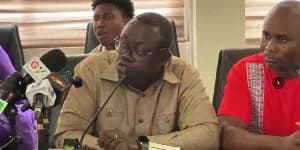
Public pre-tertiary education across Ghana remains at a standstill as the three primary teacher unions—the Ghana National Association of Teachers (GNAT), the National Association of Graduate Teachers (NAGRAT), and the Pre-Tertiary Teachers Association of Ghana (PRETAG)—have rejected government appeals to end their nationwide strike. The industrial action, which began on September 25, has left thousands of students unsupervised in major metropolitan areas including Accra, Kumasi, and the Eastern Region. Despite high-level meetings with Education Minister Haruna Iddrisu, union leaders maintain that they will not return to the classroom until their demands regarding promotion arrears and salary placements are visibly reflected in their bank accounts and payslips, dismissing verbal assurances as "promises upon promises."
At the heart of the dispute is a significant administrative bottleneck between the Ghana Education Service (GES) and the Controller and Accountant-General’s Department (CAGD). While the CAGD has confirmed the processing of salary adjustments for 6,079 newly promoted teachers, this represents only a fraction of the 58,620 cases expected. The department clarified that the delay is primarily due to missing documentation from the GES, which is required to validate the master list of promoted staff. Beyond promotion arrears, the unions are demanding the immediate implementation of a new Collective Agreement to replace the one that expired in June, as well as the payment of the Continuing Professional Development (CPD) Allowance typically settled in September.
In response to the escalating crisis, Minister Haruna Iddrisu has directed the Director-General of the GES to submit all outstanding data on promoted teachers by the end of the week to facilitate payments in the October salary cycle. The government has also proposed a 20% Deprived Area Allowance for teachers in rural sectors, though this is not slated for implementation until January 2027, following a validation exercise by a joint committee. These measures have so far failed to placate union leadership. NAGRAT President Jacob Anaba and GNAT’s Head of Salaries Isaac Baah have criticized the government for a lack of seriousness, particularly regarding the stalled negotiations with the Fair Wages and Salaries Commission (FWSC), which are now scheduled to resume on October 6.
The strike has drawn sharp criticism from political and social observers. Dr. Kingsley Agyemang, a member of the Parliamentary Education Committee, has urged the government to prioritize the GH₵5c2 billion owed to educators over infrastructure projects like the Accra–Kumasi Expressway. Meanwhile, students in affected regions have appealed to both the government and teachers to find common ground, citing fears that the prolonged closure of schools will jeopardize their upcoming end-of-term examinations. As the deadlock continues, the unions remain firm: the strike will only be suspended once documented evidence of payment and formal timelines for the Collective Agreement are provided.
Related topic
Ghana Education Service (GES): Latest News Today →

