••
Accountability and Infrastructure in Focus: PAC Probes Financial Irregularities as Suame Interchange Resumes
•3 min read•51 sources
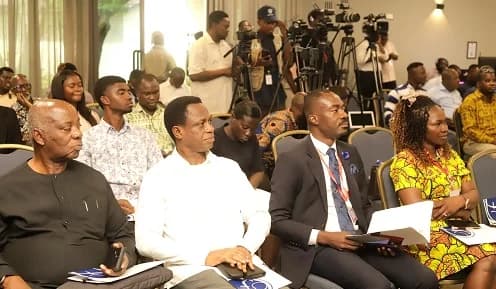
Ghana’s governance and public financial management have come under intense scrutiny as the Public Accounts Committee (PAC) of Parliament investigates several high-profile cases of alleged fiscal mismanagement. At the forefront is the summons of former Health Minister Dr. Bernard Okoe-Boye regarding a GH₵20 million payment for a proposed Parliamentary Service Hospital that has yet to see any physical construction. This inquiry is part of a broader push for accountability that includes the GH₵8.2 million 'Toilet for All' project, where funds were disbursed without work being executed, and a GH₵21 million expenditure on Black Star Square renovations despite the relocation of the 67th Independence Day celebrations. These cases, alongside the interdiction of former Defence procurement official Frank Oliver Kpodo over missing surveillance vehicles, have prompted anti-corruption campaigners like Edem Senanu to warn of systemic failures in the nation’s public spending frameworks.
On the infrastructure front, the Ministry of Roads and Highways has announced significant progress in resolving long-standing contractor debts. Minister Kwame Governs Agbodza and Ashanti Regional Minister Dr. Frank Amoakohene confirmed that all outstanding payments for the Suame Interchange project have been cleared, with work set to resume immediately to alleviate traffic congestion in Kumasi. While the Minister reaffirmed the government’s commitment to 'The Big Push' infrastructure agenda, he also raised sharp concerns regarding the Ghana Integrated Financial Management Information System (GIFMIS). Agbodza labeled the system 'not fit for purpose' due to its failure to maintain accurate records, which has led to persistent disputes between the state and contractors over certified works.
Simultaneously, a debate over institutional integrity has emerged involving the State Interests and Governance Authority (SIGA) and the policy think tank IMANI Africa. IMANI has alleged that SIGA issued directives to state-owned enterprises to monopolize insurance business with SIC Insurance PLC, a move they argue distorts market competition. SIGA’s Director General, Dr. Michael Kpessa-White, has denied these claims, asserting that the communication was intended only to ensure state insurers are included in competitive bidding processes. Amidst these tensions, Special Prosecutor Kissi Agyebeng has called for civil society support to protect the Office of the Special Prosecutor (OSP) from political interference, even as the office faces its own challenges, including a recent demand for compensation following a case of mistaken identity in a corruption probe.
Looking forward, the government is intensifying its policy implementation with the Ministry of Energy and Green Transition setting an April 15 deadline for agencies to submit roadmaps for the 24-hour economy initiative. This policy aims to drive job creation and economic transformation through continuous operations in the petroleum and energy sectors. In Parliament, Speaker Alban Bagbin has urged Members of Parliament to demonstrate renewed commitment by curbing absenteeism and lateness as they handle pending legislation, including reforms to the Ghana Gold Board Act. These developments collectively highlight a pivotal moment in Ghanaian politics, where the drive for rapid infrastructure development must be balanced against the urgent need for transparent procurement and robust institutional oversight.
This story touches markets covered on Anansi Intelligence ↗.
Live rates
Ghana gold price →More from politics
Continue exploring similar stories


