••
Ghana’s Economic Roadmap: Political Tensions Rise Over BoG Losses as Government Pushes Fiscal Discipline and 24-Hour Economy
•3 min read•35 sources
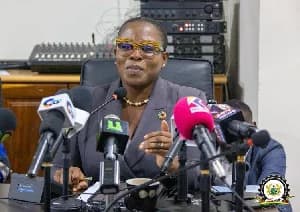
In a decisive week for Ghana’s fiscal landscape, the government has intensified its push for economic accountability and structural reform. Finance Minister Dr. Cassiel Ato Forson and his deputy, Thomas Nyarko Ampem, led by example by publicly filing their annual tax returns at the Ghana Revenue Authority (GRA), signaling a nationwide call for tax compliance as a civic duty. This move comes as the GRA warns of sanctions for individuals and businesses failing to meet the April 30 filing deadline. While the executive branch promotes transparency through personal compliance, a heated political debate has erupted in Parliament over the Bank of Ghana’s (BoG) financial health, with the Majority and Minority clashing over a projected GH¢15.7 billion loss for the 2025 financial year.
The Majority Caucus has robustly defended the central bank, asserting that the projected losses are a result of essential stabilization policies and inflation-management tools rather than operational failure. Spokesperson Atta Issah emphasized that such losses are common among global central banks, including the European Central Bank, and predicted that 2025 would mark a "peak" for financial pressure. He attributed the optimistic outlook to easing inflation—which dropped to 3.2% in March 2026—and legislative reforms like the Ghana Accelerated National Reserve Accumulation Policy (GANRAP). Conversely, the Minority, led by Kojo Oppong Nkrumah, has accused the Majority of engaging in "propaganda" to shift public perception ahead of the official release of audited accounts. The Minority remains critical of the bank's liquidity management and has called for full disclosure to allow for independent scrutiny of the deficit.
Parallel to these fiscal debates, the National Development Planning Commission (NDPC) is charting a new course for the country’s long-term growth. NDPC Chairman Dr. Nii Moi Thompson announced a strategic shift from traditional GDP-focused metrics to a more comprehensive framework prioritizing employment and wage growth. To support this, the NDPC is developing a Consolidated National Development Plan, set to launch in September, which aims to align local priorities with national infrastructure goals. Part of this spatial discipline includes the creation of designated "auto zones" to curb unregulated car sales that contribute to environmental degradation and flooding. Dr. Thompson emphasized that without disciplined spatial planning and a focus on local materials, economic growth will continue to fall short of creating the 1.7 million jobs targeted by current initiatives.
On the ground, the government’s 24-Hour Economy Markets Project has reached a significant milestone in the Oti Region, where Municipal and District Chief Executives (MDCEs) have signed contracts to begin implementation. This initiative is designed to transition Ghana into a production-led economy by encouraging a three-shift work system to boost productivity and stabilize the currency. Oti Regional Minister John Kwadwo Gyapong urged contractors to adhere to strict timelines to fulfill campaign promises of improved local livelihoods. These internal efforts are complemented by international validation, as Finance Minister Ato Forson noted the success of the IMF’s sixth review, which credited ongoing reforms with stabilizing the economy. As Ghana navigates these complex reforms, the focus remains on balancing immediate fiscal discipline with the long-term goal of inclusive, sustainable growth.
This story touches markets covered on Anansi Intelligence ↗.
Related topic
Ghana Customs Recruitment: Latest News & Updates →More from politics
Continue exploring similar stories


