••
Ghana’s Economic Momentum Gains Pace: Stock Market Hits Record GH¢266B Cap Amid Firming Recovery
•3 min read•6 sources
Ghana’s financial markets and broader economy are demonstrating a robust resurgence, characterized by record-breaking performance on the Ghana Stock Exchange (GSE) and strong validation from international monitors. For the week ending April 17, 2026, the GSE Composite Index surged by over 357 points to close at 14,024.22, while the total market capitalization leaped by 7.5% to exceed GH¢266 billion. This rally reflects a wider trend of macroeconomic stabilization, with the International Monetary Fund (IMF) confirming that Ghana’s recovery is firming up following a period of intensive reforms. Key milestones include a projected growth rate of 6% for 2025 and a significant reduction in the debt-to-GDP ratio from 61.8% to 45.3%.
Trading activity on the stock exchange saw a dramatic 47% increase in volume during the mid-April period, with 12.7 million shares changing hands for a total value of approximately GH¢62.3 million. The ICT sector, dominated by MTN Ghana, remained the primary engine of market liquidity, accounting for 64% of total volumes and 75% of the value traded. Top performers included Clydestone, which saw a 30% weekly gain, and SIC Insurance, which has posted a remarkable 272% return year-to-date. While the market saw broad gains, some volatility persisted, evidenced by Access Bank’s 27% decline during the same period, highlighting the selective nature of the current investor appetite.
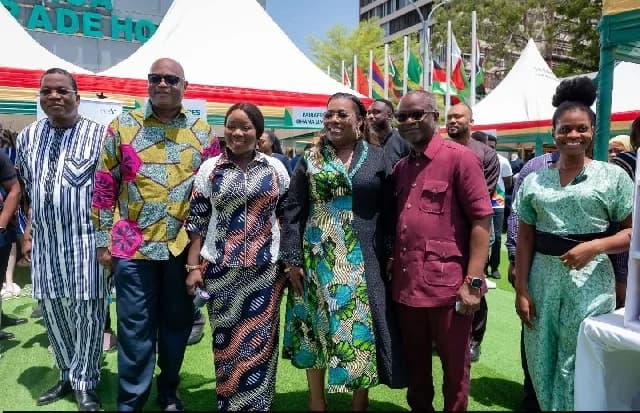
Beyond the equities market, Ghana is making significant strides in diversifying its revenue streams through Non-Traditional Exports (NTEs). Trade Minister Elizabeth Ofosu-Adjare recently announced that NTEs reached a milestone of $5.006 billion in 2025, marking a 30% increase from the previous year. This growth indicates a strategic shift away from the nation’s historical over-reliance on gold, oil, and cocoa, with NTEs now contributing 16% of total exports. The government has reaffirmed its commitment to boosting production capacity and quality standards to enhance Ghana’s competitiveness in global markets and foster sustainable job creation.
The IMF’s Director of African Department, Abebe Aemro Selassie, has praised these developments, noting that the primary fiscal balance has swung from a deficit to a 2.6% surplus. Additionally, inflation has seen a drastic cooling from 23.8% to 3.2%, while the cedi has appreciated by over 40% against the US dollar. However, the IMF maintains that continued fiscal discipline is essential to sustain these gains post-program. As Ghana positions itself as one of the stronger economies in the region with a projected growth of 4.6% moving forward, the focus remains on domestic ownership of tax policies and expenditure efficiency to ensure long-term stability.
This story touches markets covered on Anansi Intelligence ↗.
Live rates
Ghana gold price →More from business
Continue exploring similar stories

