••
Ghana Financial Market Rallies: Stock Index Hits New Peaks Amid Positive Moody’s Outlook and Currency Fluctuations
•3 min read•4 sources
The Ghanaian financial landscape is showing signs of robust activity as the Ghana Stock Exchange (GSE) concluded its most recent trading week on a high note. Driven by strong investment in the banking and insurance sectors, the GSE Composite Index climbed by 42.58 points to reach 13,149.10. This surge in market activity coincides with a broader positive sentiment fueled by credit rating agency Moody’s, which recently revised Ghana’s economic outlook from "stable" to "positive." The revision reflects significant improvements in domestic financing costs and a successful return to the domestic bond market, signaling a gradual recovery from the country's recent economic crisis.
Market performance was particularly strong within the financial services sector, with the GSE Financial Stocks Index rising by 44.22 points to settle at 7,946.37. Investor confidence pushed total market capitalisation to GH¢247.73 billion. Notable performers included GCB Bank PLC, which saw a price increase of GH¢0.45, and Ecobank Transnational Inc. (ETI), which gained GH¢0.06. Other gainers included the NewGold ETF, which rose by GH¢0.62. Conversely, Republic Bank and Fan Milk experienced declines during the session. Overall, the trading volume reached over 1.8 million shares, valued at approximately GH¢7.35 million. Year-to-date, the GSE Composite Index has posted an impressive gain of 49.93%, while financial indices have skyrocketed by 70.99%.
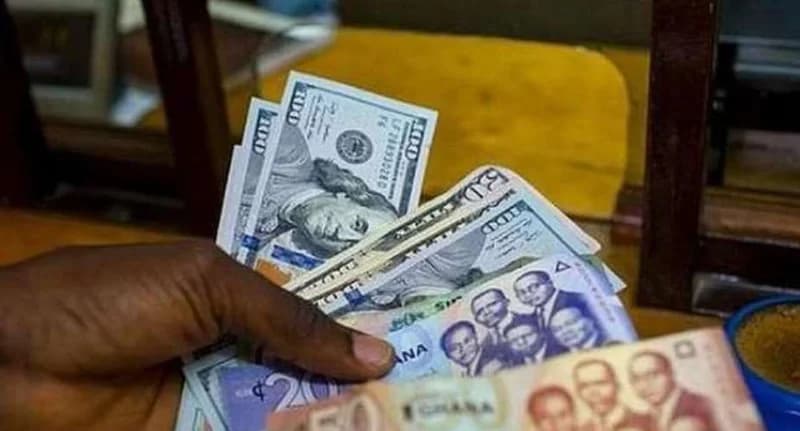
Despite the buoyancy in the equity market, the Ghanaian cedi faced slight pressure on the foreign exchange market. As of April 11, 2026, the cedi was selling at an average of GHS 11.85 at various forex bureaus, while the Bank of Ghana’s interbank market quoted a selling rate of GHS 11.04. The average buying rate at forex bureaus stood at GHS 11.50, compared to GHS 11.02 on the interbank market. The British pound and the Euro were also trading at GHS 14.56 and GHS 12.72 respectively. While these fluctuations persist, money transfer services continue to offer competitive rates for remittances, reflecting the ongoing demand for foreign exchange in a recovering economy.
Looking ahead, the structural improvements highlighted by Moody’s provide a foundation for sustained growth, with projections suggesting a more stable fiscal environment by late 2026. While the sovereign credit rating remains at "Caa1," the shift to a positive outlook underscores the effectiveness of recent domestic financing strategies and the lifting of restrictions on new bond issuances. However, analysts warn that Ghana remains vulnerable to external shocks, including exchange rate volatility and fluctuations in global commodity prices. The government's ability to maintain the momentum of domestic bond issuances will be critical in managing rollover risks and ensuring long-term financial stability.
This story touches markets covered on Anansi Intelligence ↗.
Live rates
Pound to cedi rate →More from business
Continue exploring similar stories

