••
Ghana’s Mining Sector at a Crossroads: Record Revenues and Indigenous Ambitions Meet Global Investment Declines
•3 min read•8 sources
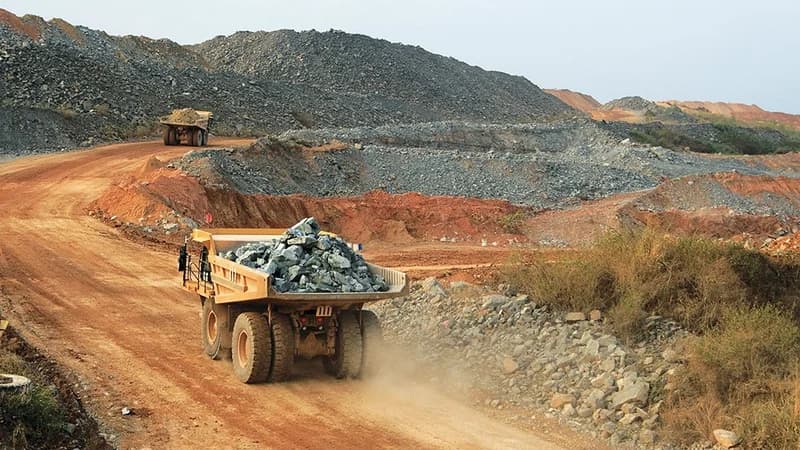
Ghana’s extractive sector is entering a transformative period defined by record-breaking revenues and a historic shift toward indigenous ownership, even as the nation grapples with a decline in global investment attractiveness. The Minerals Income Investment Fund (MIIF) reported a milestone in the 2025 financial year, collecting a record GH¢5.43 billion in mineral royalties—a 10.8% increase from the previous year. This surge was primarily driven by the gold sector, which contributed GH¢5.1 billion, buoyed by favorable international prices and enhanced monitoring protocols. Meanwhile, the manganese sector also saw a 14.4% rise in receipts, reaching GH¢212 million, signaling robust performance across the country’s mineral portfolio.
Central to this industry evolution is the potential takeover of the Damang Mine by Engineers and Planners (E&P) Company Limited. E&P is positioned to become the first indigenous firm to gain full operational control of a large-scale gold mine in Ghana, potentially ending over a century of foreign dominance in the sector. Currently a contractor at the site, E&P has been strategically laying the groundwork for this acquisition since 2022. While the Ministry of Lands and Natural Resources issued a “no-objection” letter in March 2024 to facilitate negotiations with the current operator, Gold Fields, the transition remains complex. As the April 18, 2026, handover deadline approaches, E&P has expressed concerns regarding the slow pace of negotiations, making the outcome a critical litmus test for local participation in major mining ventures.
Despite these domestic milestones, Ghana’s global standing has faced setbacks. The 2025 Global Mining Investment Attractiveness Index saw Ghana slip to 53rd place, down from 46th in 2024. Experts and former officials attribute this decline to an increasingly uncertain policy environment, regulatory inconsistencies, and a lack of comprehensive geological data. To address these gaps, the Ghana Gold Board (GoldBod) recently signed a GH¢27.5 million agreement with the Ghana Geological Survey Authority (GGSA). This partnership aims to conduct intensive geological investigations in the Funsi, Atuna, and Bensere East areas, providing the reliable data necessary to establish model mines and restore investor confidence through evidence-based resource development.
Beyond minerals, the broader economy continues to rely on cocoa as its traditional backbone, providing approximately one-third of Ghana’s export earnings. By late 2024, global cocoa prices reached historic highs of nearly $10,000 per tonne, prompting COCOBOD to adjust farm-gate prices to ensure the nation’s one million cocoa farmers benefit from market volatility. As Ghana navigates 2026, the convergence of record mineral royalties, the push for indigenous mine ownership, and high cocoa prices presents a unique opportunity for economic growth. However, the government must prioritize policy recalibration and regulatory predictability to reverse its sliding investment rank and ensure long-term stability in its most vital sectors.
This story touches markets covered on Anansi Intelligence ↗.
Live rates
Ghana gold price →More from business
Continue exploring similar stories

