••
Ghana Intensifies Mining Sector Crackdown: Lease Revocations, Military Deployment, and the Push for Indigenization
•3 min read•23 sources
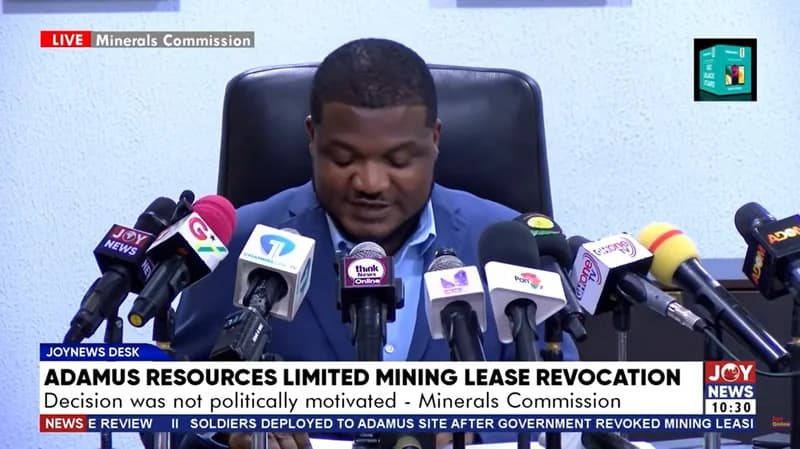
Ghana’s mining landscape is undergoing a period of intense regulatory scrutiny and structural reform as the government moves to enforce compliance and increase local participation. Central to this shift is the Ministry of Lands and Natural Resources' recent decision to revoke three mining leases held by Adamus Resources Limited at the Akango, Salman, and Nkroful concessions. The Minerals Commission, led by CEO Isaac Tandoh, cited systemic violations including unauthorized subcontracting, mining without valid operating plans, and the illegal involvement of foreign nationals in 'galamsey' activities. In response to the revocation, the Ghana Armed Forces have been deployed to secure the sites, while Tandoh has signaled that criminal prosecution against company officials is imminent, particularly following reports of officials attempting to bail out arrested Chinese nationals involved in illegal activities on their concession.
Adamus Resources has vigorously rejected these claims, asserting that the government’s actions lacked due process and were based on inaccurate information. The company maintains that it operates within legal frameworks, holding valid permits from the Environmental Protection Agency and the Minerals Commission. This standoff is part of a broader national conversation regarding the management of Ghana’s mineral wealth. Public debate has also been ignited by the transfer of the Damang mining concession to Engineers & Planners (E&P). While some view this as a victory for the government's indigenization policy, others have raised concerns about transparency and the potential for political favoritism, urging the government to publish clear criteria for awarding such concessions to ensure equitable distribution among various local firms.
Adding to the sector's complexity, the Ghana Mineworkers Union has expressed strong opposition to a government mandate requiring international mining firms to hire local contractors by December 2026. The union, representing 14,000 workers, warns that this policy could lead to lower wages and weakened job security, as local contractors may not offer the same protections as foreign entities. Simultaneously, community tensions are rising in other areas; the Catchment Area Community Alliance (CACA) has demanded the termination of the Bogoso-Prestea lease held by Heath Goldfields Limited, alleging a massive failure to meet investment targets and operational deficiencies that pose environmental risks to local residents.
These developments in Ghana reflect a wider continental trend toward heightened resource sovereignty and security. In a parallel move to enhance mining governance, the Democratic Republic of Congo (DRC) has established a paramilitary guard, backed by $100 million in investments from the US and UAE, to secure its cobalt-rich exploitation chain. Whether through military deployment in Ghana or specialized paramilitary units in the DRC, African nations are increasingly prioritizing the protection of their natural resources against illegal mining and foreign exploitation. For Ghana, the next steps involve balancing strict regulatory enforcement with the need to maintain investor confidence and protect the livelihoods of thousands of mine workers during this transition.
This story touches markets covered on Anansi Intelligence ↗.
More from politics
Continue exploring similar stories


