••
Ghana’s Business Landscape Transformed by Major Mining Investments and Multi-Million Dollar Agricultural Support
•3 min read•21 sources
Ghana’s resource and agricultural sectors are undergoing a significant transformation driven by massive capital injections and strategic structural shifts. Heath Goldfields Ltd. has announced a bold $135 million first-year investment plan to revive the Bogoso-Prestea Gold Mine, part of a larger $500 million commitment over the next decade. This revival is supported by a $35 million heavy-duty mining fleet acquired through a partnership with local contractor Fridoug Company Limited, emphasizing a commitment to local content and job creation. Simultaneously, Gold Fields is progressing with the transition of the Damang Mine to the Government of Ghana, with a 12-month lease extension ensuring a safe handover by April 18, 2026. These developments are bolstered by the robust performance of Zijin Mining Group, which reported a $7.4 billion profit and is expanding its footprint in Ghana through the Akyem Gold Mine acquisition.
Parallel to these mining advancements, the Ghana Gold Board is advancing reforms to formalize the small-scale mining sector. CEO Sammy Gyamfi recently engaged stakeholders in Kumasi to discuss the rollout of District Gold Buying Centres, which are designed to enhance market access, transparency, and fair pricing for small-scale miners. These initiatives aim to ensure that the mining sector remains a sustainable pillar of the national economy while improving the livelihoods of local operators. The government’s commitment to securing credible investors through competitive bidding for state-acquired assets like the Damang Mine further reinforces Ghana’s reputation as a stable destination for responsible foreign investment.
In the agricultural sector, the government and international partners are moving aggressively to secure food systems following Burkina Faso’s tomato export ban. The World Bank, alongside the Dutch and Norwegian governments, has secured over $23 million in grants to support tomato farmers, enhance storage, and facilitate seed multiplication. Minister for Food and Agriculture Eric Opoku has assured the public that no shortage is expected, outlining a plan to nearly double tomato yields to 15 metric tonnes per hectare. This effort is part of a broader agricultural resilience strategy that includes a $75 million World Bank allocation for cocoa rehabilitation targeting 25,000 hectares of diseased farms, a $12 million fund for the poultry sector, and a $200 million program focused on tree crop diversification.
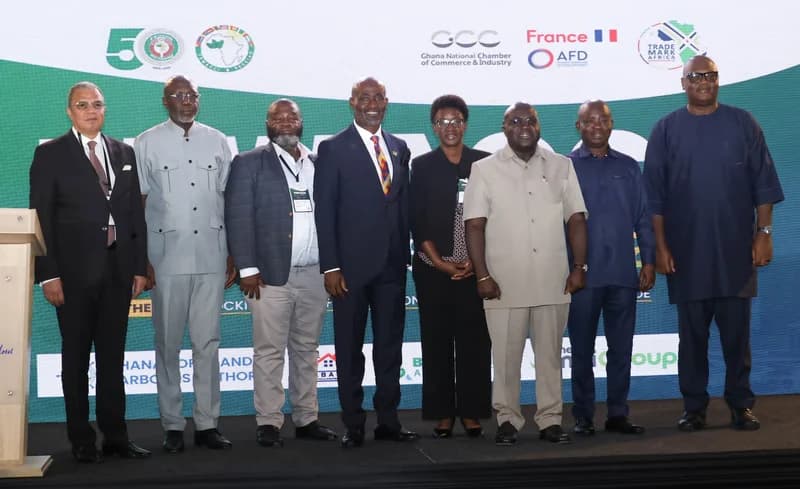
Scaling these domestic efforts to a continental level, Chief of Staff Julius Debrah has urged deeper integration within the African Continental Free Trade Area (AfCFTA). Speaking at the FEWACCI Summit, he highlighted the necessity of overcoming high trade costs and inadequate logistics to harness the transformative potential of intra-African trade. By aligning domestic production boosts in mining and agriculture with regional trade facilitation and SME support, Ghana aims to enhance its global competitiveness. These coordinated actions among government, private sectors, and development partners are set to create a more resilient and prosperous West African economy, ensuring long-term sustainability for the nation’s key industries.
This story touches markets covered on Anansi Intelligence ↗.
Live rates
Ghana gold price →More from business
Continue exploring similar stories

