••
Ghana’s Investment Landscape: Navigating Market Volatility, T-Bill Yield Shifts, and Security Warnings
•3 min read•8 sources
Ghana’s financial sector is navigating a period of significant transition as traditional investment vehicles and market indices show signs of volatility. Recent data reveals a major shift in the attractiveness of Treasury bills, once a cornerstone for local investors. Yields on 91-day T-bills have plummeted from 25.8% to approximately 10.6%, a change driven by declining inflation and government efforts to curb external borrowing. As T-bills move from growth strategies to capital preservation tools, investors are increasingly looking toward the Ghana Stock Exchange (GSE), corporate bonds, and even cryptocurrencies to maintain returns. This diversification comes despite recent turbulence on the local bourse; in the week ending May 8, 2026, the GSE shed GH¢12.5 billion in market capitalization, a 4.4% decline led by significant losses in major stocks like MTN Ghana and Ecobank Transnational Incorporated.
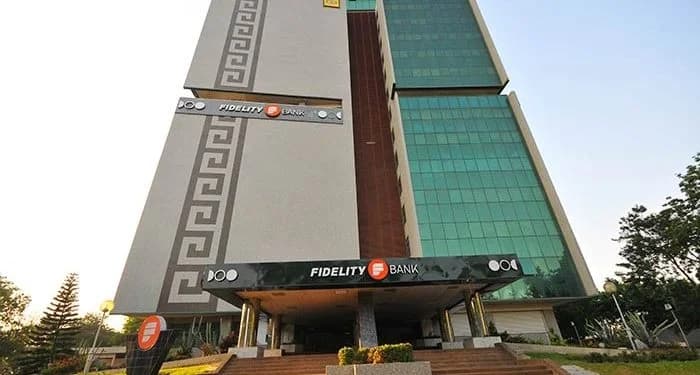
Amidst these shifting market dynamics, Fidelity Bank Ghana has issued an urgent public warning to protect investors from potential fraud. The bank has formally distanced itself from an entity calling itself 'Fidelity Capital Investment Group,' clarifying that it has no affiliation or connection with the group. Fidelity Bank emphasized that its only authorized investment subsidiary is Fidelity Securities Limited, which is fully licensed and regulated by the Securities and Exchange Commission (SEC). The SEC has previously flagged the 'Fidelity Capital Investment Group' for operating without a license and exhibiting traits of a Ponzi scheme. The bank urged the public to verify the regulatory status of any investment firm directly with the SEC before committing funds to avoid falling victim to misleading associations.
While some sectors face uncertainty, others are reporting historic growth. The Ghana Publishing Company Limited saw an eightfold increase in profitability, with profits after tax soaring from GH¢2.227 million in 2024 to GH¢16.959 million in 2025. This surge in performance among state-owned enterprises highlights pockets of efficiency within the broader economy. Simultaneously, veteran business mogul Dr. Ernest Ofori Sarpong has recently shared insights into wealth creation, emphasizing the long-term stability of real estate. Reflecting on his journey, Dr. Sarpong noted that he built a substantial real estate portfolio before the age of 30, including commercial properties in Accra, by recognizing market gaps and reinvesting capital from family businesses.
As the Ghanaian economic landscape evolves, the contrast between recent stock market losses and the exponential growth of entities like the Ghana Publishing Company underscores the need for a balanced investment approach. Analysts suggest that while the GSE's recent 4.4% dip raises concerns about sustainability, the 79% returns seen throughout 2025 indicate underlying potential for those willing to weather short-term volatility. Moving forward, the financial community is advised to prioritize due diligence—authenticating institutions to avoid fraudulent schemes like 'Fidelity Capital'—while exploring a mix of high-growth shares and stable real estate ventures to navigate the low-yield environment of traditional government securities.
This story touches markets covered on Anansi Intelligence ↗.
More from business
Continue exploring similar stories

