••
Ghana Expands Global Economic Footprint with Multi-Billion Dollar Investment Pledges and Strategic Partnerships
•2 min read•17 sources
Ghana is intensifying its global economic engagement, leveraging its post-IMF stabilization to attract billions in foreign direct investment (FDI). Simon Madjie, CEO of the Ghana Investment Promotion Centre (GIPC), recently revealed that the European Union remains the nation's largest investor, contributing approximately US$16.24 billion across over 2,200 projects since 1994. With manufacturing alone receiving over $8.49 billion, this surge in interest is mirrored across other major global economies. Ghanaian officials are increasingly showcasing the country’s stability and predictability as competitive advantages to foster industrial transformation and inclusive growth.
On the diplomatic and industrial front, Ghana is actively courting North American and Asian markets. In Atlanta, Ambassador Victor Smith highlighted a new $40 million investment initiative spanning fintech and agriculture, while Minister of Trade Elizabeth Ofosu-Adjare invited Chinese investors to utilize Ghana as a hub for the African Continental Free Trade Area (AfCFTA). To facilitate this, a new China-Ghana Trade and Investment Promotion Centre has been established in Jinan. Simultaneously, a strategic Memorandum of Understanding with the Legislative Council of Nebraska aims to overhaul Ghana's agricultural sector by establishing local dairy and meat processing plants, specifically targeting a reduction in the country's 90% reliance on imported dairy products.
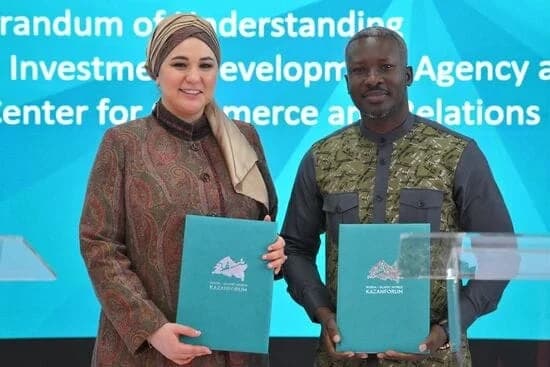
Ghana's reach also extends toward emerging markets and regional partners. The Ghana-Russia Center for Commerce and Relations recently signed three landmark cooperation agreements at the KazanForum 2026 to deepen ties in energy and trade facilitation. Closer to home, the GIPC is pushing for a robust "West-East" business corridor with Ethiopia, urging firms to tap into underutilized trade opportunities in textiles and agro-processing. Furthermore, a high-level mission from the Dubai Chambers in Accra signaled the United Arab Emirates' intent to use Ghana as a strategic trade gateway to West Africa, focusing on private-sector partnerships and joint investment ventures.
These diverse initiatives are underpinned by significant domestic reforms designed to maintain investor confidence. Following the completion of a US$3 billion IMF program and an upgraded sovereign credit rating from Fitch, Ghana is transitioning toward a Policy Coordination Instrument to ensure fiscal discipline. The government is also modernizing its legal framework through the new Ghana Investment Promotion Authority Act, which aims to streamline operations and enhance the business environment. As these global partnerships mature, officials anticipate tangible economic outcomes, including job creation, enhanced industrial capacity, and a more resilient national economy.
This story touches markets covered on Anansi Intelligence ↗.
Live rates
Dollar to cedi rate →More from business
Continue exploring similar stories

