••
Ghana Navigates Fiscal Challenges as Leaders Propose Bold Reforms for Economic Transformation
•3 min read•12 sources
Ghana’s economic landscape is currently defined by a mix of fiscal tightening and ambitious proposals for structural reform. The government recently recorded a 16% undersubscription in its latest treasury bills auction, falling short of its GH¢5.8 billion target. While the 91-day bill remained the most popular among investors, drawing GH¢3.368 billion in bids, the Bank of Ghana reported that only GH¢4.9 billion was raised across all tenors. Interest rates showed mixed signals: the yield on the 364-day bill rose to 10.45%, while the 91-day yield saw a slight decrease. Amid these borrowing challenges, Finance Minister Dr. Cassiel Ato Forson announced a strategic shift in infrastructure funding, declaring that the government will no longer borrow to finance the Accra-Kumasi Expressway. Instead, the project will be funded through petroleum revenues and mineral royalties, with approximately GH¢4.5 billion already earmarked for road infrastructure under a 'Big Push' agenda.
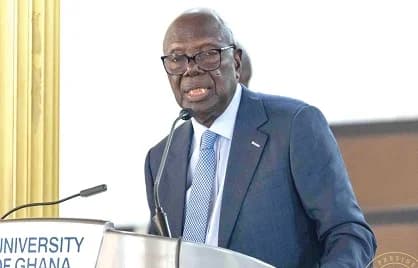
To address long-term growth, prominent business leaders and economists are calling for a complete overhaul of Ghana’s economic management framework. Edward Effah, founder of Fidelity Bank Ghana, has proposed the creation of a National Economic Transformation Council, chaired by the President, to streamline industrialization and mobilize $25 billion over five years. This proposal was echoed by Dr. Nii Moi Thompson, Chairman of the National Development Planning Commission, who introduced a '3D Growth' model. Dr. Thompson argued that relying solely on GDP is insufficient, advocating for a framework that equally measures job creation and wage growth to better reflect the living standards of the 80% of workers currently in the informal sector. Furthermore, business strategist Dr. Ishmael Yamson urged state agencies to eliminate policy contradictions, emphasizing that institutional coordination is vital to attracting the investment needed for sustainable development.
In the financial sector, the Bank of Ghana is intensifying reforms to bolster economic resilience against emerging threats like cybersecurity and climate change. Governor Dr. Johnson Pandit Asiama highlighted a transition toward a proactive supervisory framework to identify vulnerabilities early. Despite these efforts and a surge in gross international reserves to US$14.4 billion, the cedi remains under significant pressure, depreciating by over 10% due to high corporate demand for dollars and seasonal dividend repatriation. Concurrently, efforts to restore public confidence in the banking sector continue, with Dr. Papa Kwesi Nduom of Groupe Nduom reassuring customers that work is underway to recover locked-up funds from GN Savings following its license revocation. These developments collectively underscore a pivotal moment for Ghana as it seeks to balance immediate fiscal stability with a more structured, private-sector-led path to industrialization.
This story touches markets covered on Anansi Intelligence ↗.
Live rates
Dollar to cedi rate →More from business
Continue exploring similar stories


