••
Ghanaian Communities and Foundations Launch Broad Initiatives to Boost Literacy and Academic Excellence
•3 min read•7 sources
Across Ghana, a diverse range of stakeholders—including corporate entities, local government officials, and non-profit foundations—are intensifying efforts to enhance educational outcomes and literacy. From the successful performance of juvenile inmates in national examinations to the establishment of community libraries and specialized training workshops, these initiatives reflect a nationwide commitment to empowering the youth through academic excellence and practical skills development. These efforts are particularly focused on bridging resource gaps in underserved areas and fostering a culture of lifelong learning.
In a significant achievement for the Ghana Education Service’s prison education program, juvenile inmates at the Senior Correctional Centre in Accra recorded a 100% pass rate in the 2026 Basic Education Certificate Examination (BECE). This academic success is mirrored in the Kpandai District, where District Chief Executive Haruna Abdul-Karim provided essential school supplies to 61 high-performing BECE candidates who scored between six and 12. Notably, 53 of these beneficiaries were girls, underscoring a growing trend of academic potential among young women in the district and providing them with the necessary tools to transition into senior high school despite prevailing economic challenges.
Literacy and resource accessibility remain central to these development efforts. In Sekondi-Takoradi, Karpowership organized a reading and storytelling clinic at Essipong STMA Basic School to mark International Literacy Day, donating books and bags to foster a culture of reading among young learners. Similarly, the Paga Youth Movement (PAYOM) recently commended educationist Hajia Halima Sadia Mohammed for her significant donation of books and materials to the Paga Community Library. These contributions are viewed as vital investments in knowledge that will serve as long-term resources for students and residents in the Upper East Region.
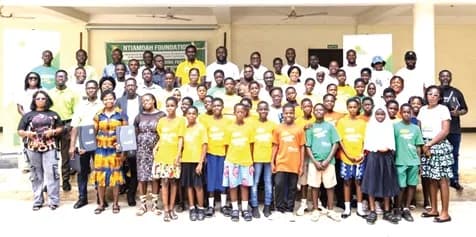
Beyond traditional academics, organizations are focusing on holistic and future-ready skills. The Ntiamoah Foundation recently conducted a four-day workshop in Akyem Adausena for 64 education stakeholders, focusing on Behavioral, Expressive, Attitudinal, and Mental (BEAM) intelligence to improve learning outcomes. Simultaneously, the HIDAH Humanitarian Foundation concluded a free two-day skills development program in East Legon, led by founder Mujahida Ibrahim Prah. This program, supported by Fatimatu Abubakar, equipped participants with leadership abilities and practical skills, emphasizing that humanitarian service must include long-term empowerment.
These coordinated efforts by foundations, media outlets like Ahotor 92.3 FM, and local leaders highlight a collaborative approach to bridging educational gaps. Ahotor FM is currently preparing for its third Academic Showdown in Tema West, a competition designed to promote academic excellence and provide feedback for teachers. By providing both the material resources and the intellectual framework necessary for growth, these stakeholders are ensuring that students—regardless of their background or current circumstances—have the support needed to break cycles of poverty and contribute meaningfully to Ghana’s development.
Related topic
Ghana Education Service (GES): Latest News Today →

