••
Education Minister Announces Furniture Procurement to End Double-Track System as Rural Schools Face Infrastructure Crisis
•3 min read•17 sources
The Minister of Education, Haruna Iddrisu, has announced a significant furniture procurement initiative aimed at phasing out the double-track system in Senior High Schools (SHSs) across Ghana. During a monitoring visit to the Western Region, including Tarkwa Senior High School, the Minister revealed that many institutions possess sufficient classroom infrastructure but remain on the double-track system solely due to a lack of desks and chairs. In collaboration with the Ministry of Finance, the government plans to target these specific schools to increase their student capacity, allowing them to transition to a more efficient single-track academic calendar. This move is part of a broader strategy to enhance secondary education accessibility and quality nationwide.
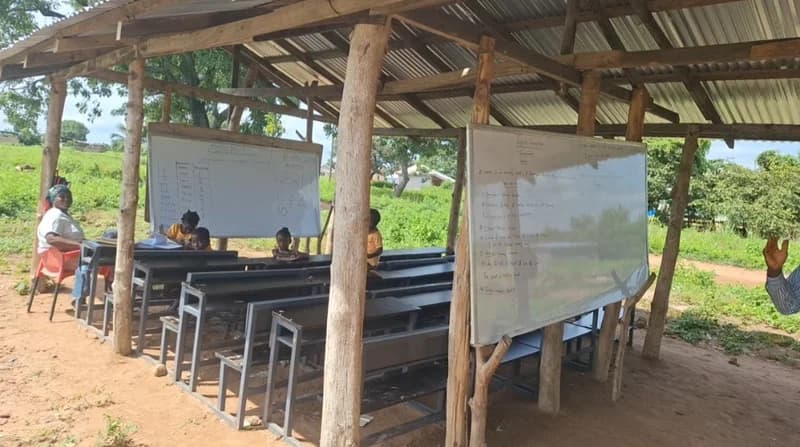
While the government focuses on logistical improvements in the SHS sector, primary education in rural communities continues to face severe infrastructure and staffing challenges. In Bresuano, located in the Atebubu-Amantin Municipality of the Bono East Region, pupils from Kindergarten to Primary Six are currently forced to learn in a dilapidated pavilion without partitions or doors. The teacher shortage is equally dire; only two teachers manage the entire school, with one teacher, Madam Magnus George Rita, responsible for four classes simultaneously. In response, the Municipal Assembly, led by Chief Executive Thomas Maswud Musah Ayarba, has begun constructing a new six-unit classroom block and has promised to post additional teachers once the facility is complete to align with Sustainable Development Goal 4 (SDG4).
Compounding these infrastructure issues are administrative concerns within the Ghana School Feeding Programme. National Coordinator Hajia Fati Forgor has expressed alarm over the inflation of school enrollment figures by some head teachers, a practice she warns deprives genuinely needy schools of resources. During a workshop for Ghana Education Service (GES) officials, she called for a cleanup of enrollment data to ensure the fair distribution of funds. Simultaneously, the GES is urging local communities to support the program by providing adequate kitchen facilities. With over 12,000 schools lacking proper cooking infrastructure, officials emphasized that community involvement is vital for maintaining food safety and hygiene while incorporating indigenous meals into the school menu.
These collective developments highlight the complex challenges facing the Ghanaian education sector, from high-level policy transitions to fundamental resource gaps in deprived areas. As the Ministry of Education works to resolve furniture shortages at the secondary level, the focus remains on bridging the gap for rural basic schools that lack the necessary environment for quality learning. The government’s commitment to universal school feeding and infrastructure expansion serves as the primary mechanism for ensuring that all students, regardless of their location, can access inclusive and equitable education.
Related topic
Ghana Education Service (GES): Latest News Today →

