••
Ghana’s Economic Recovery: Bank of Ghana Faces Mounting Losses Amidst Record Reserves and Plunging Inflation
•3 min read•23 sources
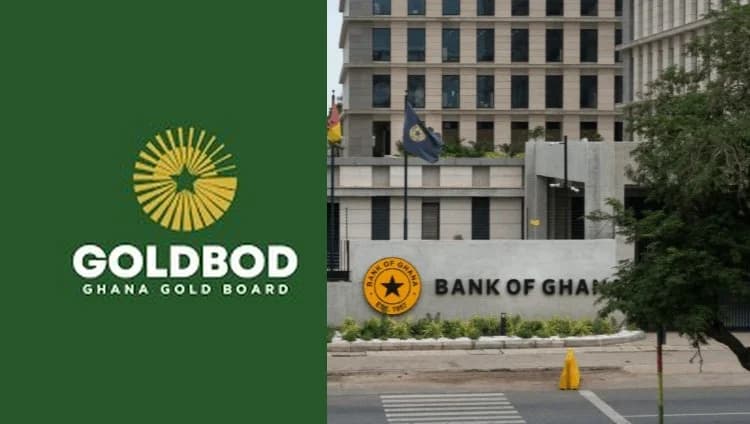
Ghana’s economy has demonstrated a striking recovery through 2025 and early 2026, characterized by a sharp decline in inflation and record-breaking international reserves. According to recent financial reports and government disclosures, inflation dropped from a staggering 54% in late 2022 to just 3.2% by March 2026, while the country’s international reserves peaked at an all-time high of $14.5 billion in February 2026. This period of stability was further bolstered by a 6% GDP growth rate in 2025 and a 41% appreciation of the Cedi, which the Bank of Ghana (BoG) described as a 'mean reversion' following years of volatility. However, this macroeconomic success has come at a significant cost to the central bank’s balance sheet, sparking a national debate over its financial health and long-term sustainability.
The Bank of Ghana reported a net loss of GH‵15.63 billion for 2025, a 64.7% increase from the previous year, pushing its total negative equity to approximately GH‵96.3 billion. These losses are largely attributed to the high costs of monetary policy operations used to stabilize the economy, including GH‵16.7 billion spent on liquidity management. Additionally, the Domestic Gold Purchase Programme (DGPP) and the operational structure of the newly established Ghana Gold Board (GOLDBOD) have come under scrutiny. While GOLDBOD reported a GH‵5.4 billion surplus and successfully formalized artisanal gold exports through a dedicated anti-smuggling taskforce, the BoG incurred a GH‵9.05 billion loss acting as a funding intermediary for these transactions. The Institute of Economic Research and Public Policy (IERPP) has labeled the situation as 'structural financial distress,' questioning the central bank's technical solvency.
In response to these concerns, BoG officials and some economic experts, including CEO Joe Jackson, argue that the bank remains 'policy solvent.' They contend that central banks should be judged by their ability to achieve macroeconomic objectives like price stability rather than traditional accounting profits. To address the equity deficit, the government has committed to a phased recapitalization plan intended to restore the BoG’s capital base by 2032. Meanwhile, the International Monetary Fund (IMF) is conducting its final reviews of Ghana’s $3 billion Extended Credit Facility. If the current trajectory holds, Ghana is expected to exit the IMF program by August 2026, marking a pivotal transition toward independent fiscal management.
Moving forward, the focus remains on whether Ghana can maintain its low-inflation environment while restoring the central bank's financial integrity. While the Majority Caucus in Parliament has praised the BoG for its strategic policy actions, critics like Dr. Dennis Nsafoah warn that relying on one-time gold reserve liquidations is not a sustainable path to solvency. The next steps involve GOLDBOD taking full independent control of gold trading by January 2026 and the government ensuring that recapitalization efforts do not place an undue burden on taxpayers. For now, Ghana stands at a crossroads where robust macroeconomic indicators must be balanced against the urgent need for structural financial reforms.
This story touches markets covered on Anansi Intelligence ↗.
Live rates
Bank of Ghana policy rate →More from business
Continue exploring similar stories

