••
Ghana’s Commodity and Energy Sectors Pivot Toward Domestic Value Addition Amid Global Market Volatility
•3 min read•18 sources
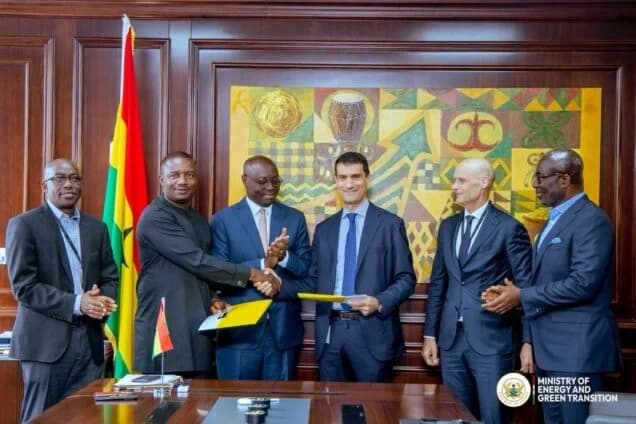
Ghana's extractive and commodity sectors are undergoing a significant transformation, marked by aggressive domestic processing policies in cocoa and substantial infrastructure agreements in the energy sector. A key highlight is the push for a 50% domestic cocoa processing mandate starting in the 2026/2027 season, aimed at capturing a larger share of the $130 billion global chocolate market. To support this, the government has solidified agreements to boost domestic gas production through the Offshore Cape Three Points (OCTP) project, targeting 350 million standard cubic feet per day by 2028. These initiatives, signed by Energy Minister John Abdulai Jinapor and Finance Minister Cassiel Ato Forson, are designed to enhance energy security and reduce reliance on expensive fuel imports. In London, Dr. Wisdom Kofi Dogbey of the Cocoa Marketing Company (CMC) has been courting global investors at the London Stock Exchange to support these reforms. He emphasized that moving up the value chain from raw beans to processed goods, including expansion into the beauty and healthcare industries, is vital for economic resilience. This domestic drive comes as the CMC urges calm regarding a World Bank forecast predicting a potential 50% drop in cocoa prices by 2026, noting that the forecast is based on an unusually high base year. Meanwhile, the Ghana Gold Board reported a robust GH"5.45 billion surplus for 2025, though experts suggest this success must be leveraged to transition from basic extraction to local refining and manufacturing to ensure long-term job creation. The downstream petroleum and electricity sectors are also modernizing. The Tema Oil Refinery (TOR) recently engaged with global leaders at the 2026 Offshore Technology Conference in Houston to explore cleaner energy and sustainable production. Locally, the Electricity Company of Ghana (ECG) completed a GH"290,000 transformer upgrade in Chorkor to stabilize power supply, while the Energy Commission certified 275 new electrical professionals to improve safety standards. Additionally, Karpowership Ghana has intensified community engagement, hosting the Western Regional House of Chiefs to demonstrate the role of the Karadeniz Powership Osman Khan in stabilizing the national grid. These domestic efforts provide a buffer against regional and global instability. Nigeria’s local refineries received less than half of their allocated crude in early 2026 due to pricing disputes, and Iraq has been forced to offer steep discounts of up to $33.40 per barrel on Basrah crude due to shipping risks in the Strait of Hormuz. While Ghana focuses on growth, the business climate remains under scrutiny as the Accra Circuit Court handles a high-profile GH"49.6 million gold fraud case, reminding stakeholders of the ongoing need for regulatory vigilance and transparency in the commodity trade.
This story touches markets covered on Anansi Intelligence ↗.
Live rates
Ghana gold price →More from business
Continue exploring similar stories

