••
ECOWAS Targets Rice Self-Sufficiency by 2035 to Slash $4bn Annual Regional Import Bill
•2 min read•5 sources
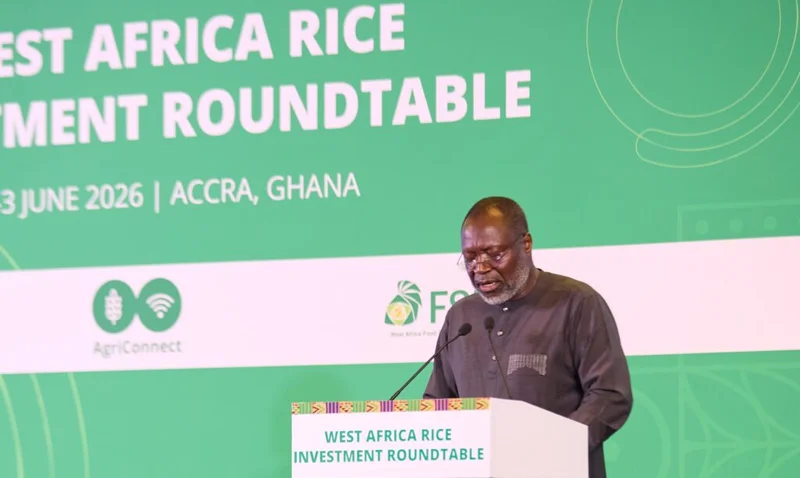
The Economic Community of West African States (ECOWAS) has launched an ambitious initiative to achieve regional rice self-sufficiency by 2035, aiming to close a significant supply gap that currently costs the region between $3 billion and $4 billion in annual imports. During the West Africa Rice Investment Roundtable held in Accra, regional leaders and stakeholders emphasized that the current reliance on foreign rice is economically unsustainable. With the region currently producing only 61% of its rice consumption, the new Regional Rice Roadmap (2025-2035) seeks to transform the sector from subsistence farming into a robust, commercially driven industry capable of meeting the demands of a growing population and changing consumption patterns. Ghana's Vice President, Prof. Naana Jane Opoku-Agyemang, and Deputy Minister for Finance, Thomas Nyarko Ampem, joined ECOWAS Commission President Dr. Omar Alieu Touray in calling for urgent, transformational capital investment. Vice President Opoku-Agyemang highlighted rice as a strategic economic asset, noting that the broader African continent spends over $50 billion annually on food imports. She argued that localizing production is essential for strengthening food security and creating jobs. Deputy Minister Ampem further explained that the heavy reliance on imports drains vital foreign exchange reserves and undermines domestic economic stability, advocating for targeted investments in irrigation, storage facilities, and logistics to attract private sector players. The strategy to bridge the production-consumption gap involves a coordinated effort through national action plans and partnerships with international financial institutions like the World Bank and the African Development Bank. Dr. Touray noted that while regional output has risen, structural challenges such as low productivity and high production costs continue to hamper progress. The roadmap is designed to address these bottlenecks by fostering investor confidence and integrating value chains, ensuring that rice production becomes a profitable venture for local farmers. Moving forward, the focus of ECOWAS and its partners will be on shifting from policy discussions to measurable action on the ground. By mobilizing regional and international investment, the initiative aims to build a resilient agricultural sector that not only reduces the multi-billion dollar import bill but also safeguards West Africa's food sovereignty. The two-day roundtable serves as a critical platform for aligning private sector interests with government policy to ensure the 2035 self-sufficiency goal becomes a reality.
This story touches markets covered on Anansi Intelligence ↗.
Live rates
Dollar to cedi rate →More from business
Continue exploring similar stories


